
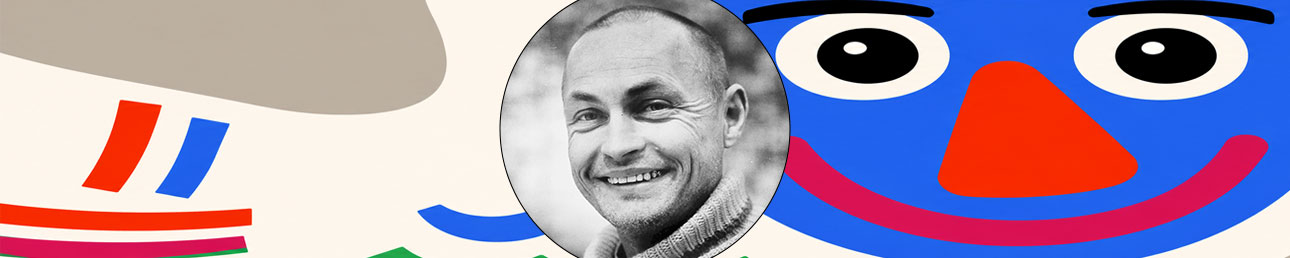
Erik Höglund – Glass from Boda
| "I am constantly searching for a primordial simplicity in the shape and color of the glass." |


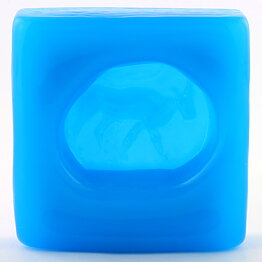
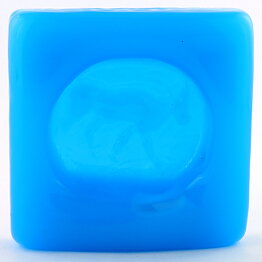
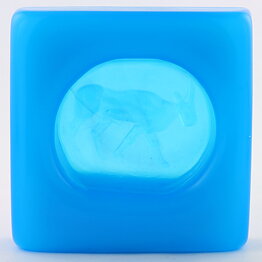
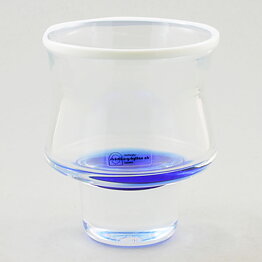

![Erik Höglund (1976) Bronze Medallion with King Motif (Magnus Henriksson) 4 cm [Sample Images]](https://cdn.abicart.com/shop/images/223448241-origpic-41fa12/4412/art12/h8241/IMG_1333.jpg?max-width=262&max-height=262&quality=85)
![Erik Höglund (1976) Bronze Medallion with King Motif (Sverker Karlsson) 4 cm [Sample Images]](https://cdn.abicart.com/shop/images/223448219-origpic-8b951f/4412/art12/h8219/IMG_1331.jpg?max-width=262&max-height=262&quality=85)
![Erik Höglund (1976) Bronze Medallion with King Motif (Erik den Helige) 4 cm [Sample Images]](https://cdn.abicart.com/shop/images/223448195-origpic-490df2/4412/art12/h8195/IMG_1329.jpg?max-width=262&max-height=262&quality=85)
![Erik Höglund (1976) Bronze Medallion with King Motif (Sverker den Äldre) 4 cm [Sample Images]](https://cdn.abicart.com/shop/images/223448161-origpic-292242/4412/art12/h8161/IMG_1327.jpg?max-width=262&max-height=262&quality=85)
![Erik Höglund (1976) Bronze Medallion with King Motif (Karl Sverkersson) 4 cm [Sample Images]](https://cdn.abicart.com/shop/images/223448145-origpic-db3700/4412/art12/h8145/IMG_1324.jpg?max-width=262&max-height=262&quality=85)
![Erik Höglund (1976) Bronze Medallion with King Motif (Knut Eriksson) 4 cm [Sample Images]](https://cdn.abicart.com/shop/images/218027633-origpic-1f5e47/4412/art12/h7633/IMG_7867.jpg?max-width=262&max-height=262&quality=85)
Erik Höglund – A Short Biography
The Childhood in the South of Sweden
Erik Höglund was born in 1932 in the coastal city of Karlskrona in the south of Sweden. His mother died early, and his father – a bank worker – soon remarried. Tore, his older brother, would also become an artist.
The Höglund home was modestly middle class. Erik has a recollection of himself as some sort of a loner at the time. At school, he took an interest in drawing, crafts, and sports. When he was twelve, he contracted diabetes which affected his health in later years.
| ”I would often disappear from school to go off and draw by myself. At that time, I had a terrible time with theoretical subjects. I would rather wander around with my sketchbook experiencing an entirely different world. Preferably out in the archipelago where the fishermen didn't care much about book learning. What counted out there was manual dexterity.” |
It was during this period that Erik Höglund developed his ability to mingle with craftsmen and to respect their diligent labors.

Erik at the Swedish School of Arts, Crafts and Design in 1950

Glass design from Boda in the 1950s or 1960s
Art Studies in Stockholm
When Erik was 16, he began his art education at the Swedish School of Arts, Crafts and Design in Stockholm. Initially, he studied drawing but soon changed major to sculpture. While the older classmates traveled abroad during vacations, he was content with cycling in Sweden.
| ”I had very little money but always met helpful farmers who were willing to offer me some of the buttermilk they gave their pigs. And if I were able to draw pictures of their horses, I would be assured of a supper and a place to spend the night.” |
When he was 21, Erik Höglund married a classmate from art school – and a daughter soon followed. He had six children in total in 1953–1975, and most of them started working in creative fields. Family life often influenced his choice of motifs. Many of his sculptures deal with family relations, children and the various problems arising in a close-knit group.

Pendant with stamped woman seal from Boda in the 1950s or 1960s

Erik with Erik Rosén, the legendary director of the Boda glassworks, in the 1950s
Arriving at Boda
In 1953, the director of the Boda glassworks, Erik Rosén, sent a request to the art school for a young glass designer. Erik Höglund took the chance, even though he had very little experience with glass. He arrived by train carrying a simple backpack. No one knew he would stay for 20 years and revolutionize the Swedish glass industry.
| ”We agreed that I would work as a designer there for six months at a time — provided that I didn’t mention what my salary was so as not to arouse the concern of the board. It was not common to employ artists at glassworks the time. I received a salary of 200 kronor a month — a symbolic sum since the rent for my apartment in Stockholm was 250 kronor. Those first years I remember as being arduous but fun." |

Erik in the chock-full Boda studio in the mid-1950s

"People" series from Boda in 1957
The First Years at Boda
Erik Höglund started working for Boda when the company and the entire Swedish glass industry were expanding. As the world of glass was completely new to him, he wanted to learn as quickly as possible. So as not to disturb anyone at the glass furnace, he learned to blow and grind glass at night. Erik often stressed hard work as the key to success.
| "I was doing something I believed in. I was stubborn and I was lucky. Also, my ideas were always complemented by a fruitful collaboration with highly experienced craftsmen.” |
In 1954, Erik set out on his first scholarship abroad to Italy and Greece. He was more interested in sensuous Etruscan and Greco-Cretan culture than in classic lines and shapes. During the trip, he saw what real poverty was like, and his experiences in the war-torn lands of the Mediterranean made a strong impression on him.

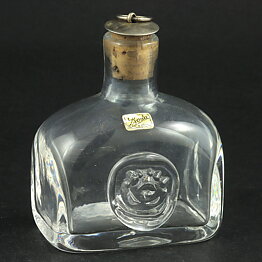
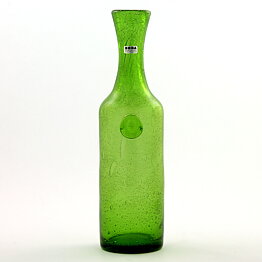
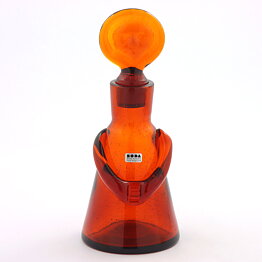
Bottle design from Boda in the late 1960s

Erik with Boda glass master Erik Eckerström in teh 1960s
Early Recognition and the Breaking of Rules
After only one year at Boda, the Swedish National Museum found Erik Höglund’s work sufficiently interesting to purchase several pieces for a big exhibition devoted to Swedish glass. A sensual simplicity in these early works attracted immediate interest.
There were frequent near-conflicts between the glassblowing tradition and Erik's creative ideas during the ensuing years. At times, traditionalists protested. For example, when he threw potatoes in a crucible of molten glass in order to create air bubbles, many people at Boda thought he had gone too far.
| ”Ruben Hjelm, who was one of the foremost masters, threw his glassblowing pipe to the floor and went home. He had been told since he was a child that there was never to be the slightest trace of bubbles in the glass. So I took along a bottle of schnapps and went home to Ruben’s to have a good talk with him, and before long we had become friends for life.” |

Erik with daughter Anna in the early 1960s

Book support from Boda in the 1960s
Artistic Expression
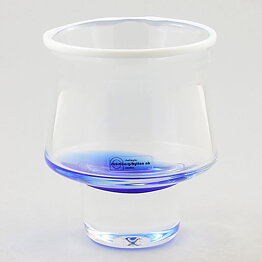
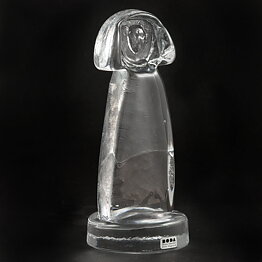
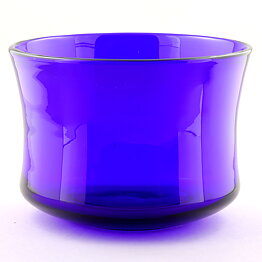
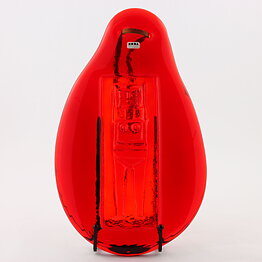
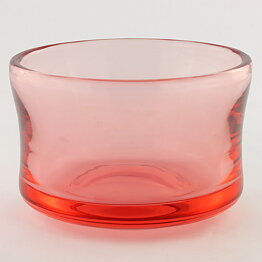
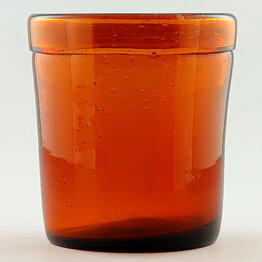
Erik Höglund developed his own distinctive style in the 1950s. The shapes were simple and primordial, often inspired by primitive culture and folksy glass art. The objects were heavy and rustic, without sharp edges or flat surfaces. The glass often took human and sculptural shapes.
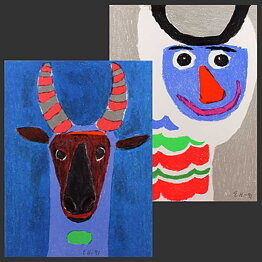
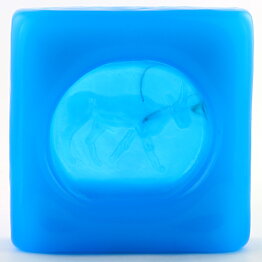
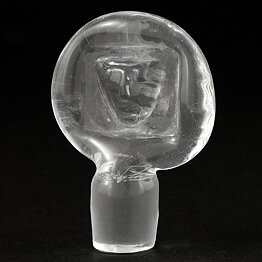
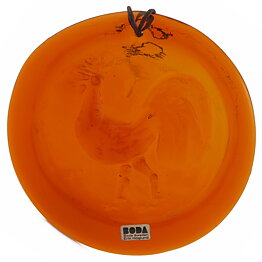
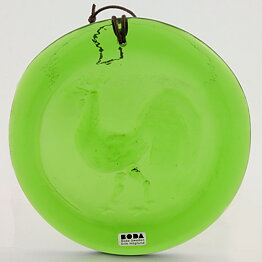
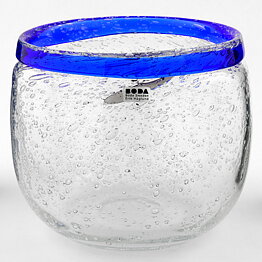
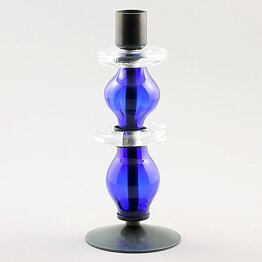
Erik used colored glass that was widely enhanced against the light. Air bubbles were present in the glass mass, sometimes induced by the production. He often stamped seals in the glass portraying faces, bulls, and other symbols.
His artistic expression was one of conscious non-perfectionism. Therefore, Erik stood apart from the extremely successful Swedish glass art from the first part of the 20th century.

Concrete block with inserted glass from Boda in the 1960s

Erik working with bricks in the 1960s
Glass for the Masses
At first, the Swedish market opposed Erik Höglund’s glass. The shops had never seen anything like it, and the sales manager complained to Boda saying that it was impossible to sell.
But the director allowed Erik to continue a little longer with his design vision: ”I don’t understand what you're doing but it is just as well you continue until you succeed.” When leading stores refused to exhibit his works, Erik arranged own exhibitions at small galleries in Stockholm.
In 1957, Höglund received what was perhaps the most prestigious design award in the world, the Danish Lunning Prize. Soon enough, the sales of his glass designs skyrocketed Erik’s sense of design was to noticeably alter the daily life of the Swedish homes.
After 10 years at Boda, Erik Höglund had found an international audience. He was called a wonder boy in the United States, and everything he touched seemed to turn to gold.
| ”I could hardly believe all the success I was having. Maybe it was just a lucky accident. My response was to work even harder." |

Erik in a photo shoot for an exhibition in the 1960s

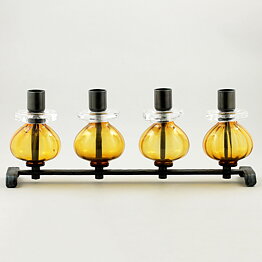
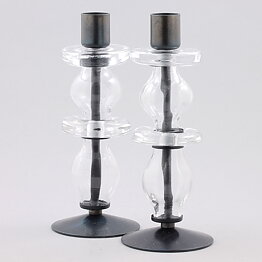
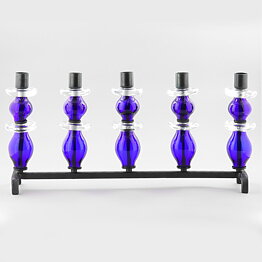
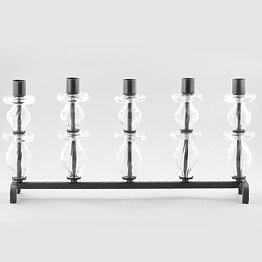
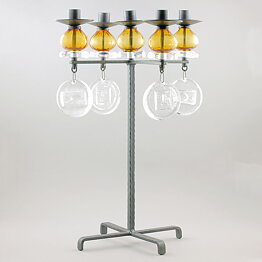
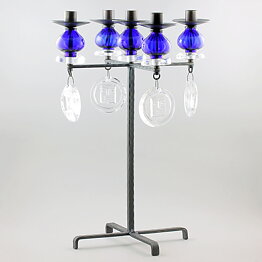
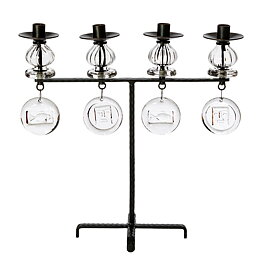
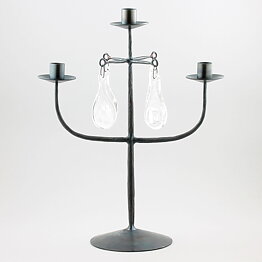
Chandelier made of iron and glass for Boda in the 1960s
Smithery and Carpentry
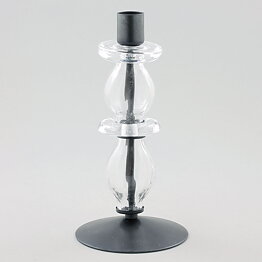
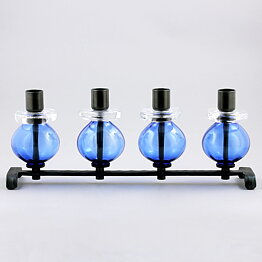
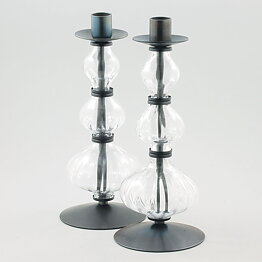
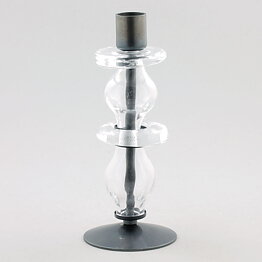
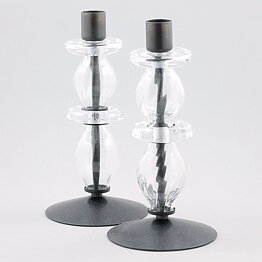
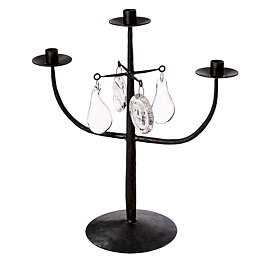
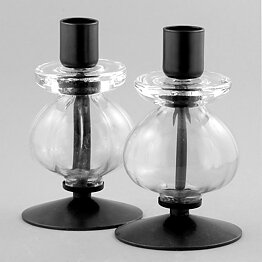
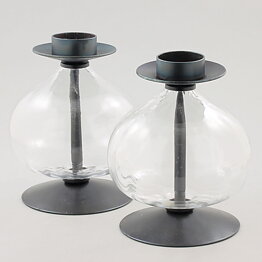
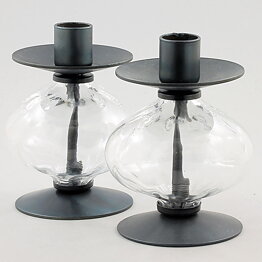
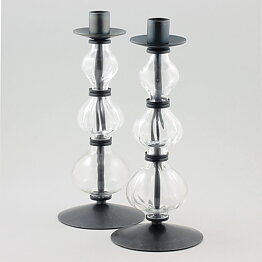
In the 1950s, Erik started to combine glass and forged iron in his designs. And in the 1960s, he started designing objects made of other materials. In the process, he hired and collaborated with skilled blacksmiths, carpenters, and stonemasons from the local area. Erik's artistic expression could also be seen when working with the new materials: Simple rounded shapes and a sturdy folksy feeling.

Rocking horse from Boda in the 1960s

Erik in New York in 1965
Leaving Boda
Erik Höglund left Boda after 20 years in 1973 to start his own smithery. He then had become the designer who most personified the enormous vitality of the Swedish art industry. The decision had not been made in a hurry. During the last years at Boda, Erik felt more and more limited in his creative process by the economic concerns of the factory.
| "Economic considerations make the designer more of a constructor than an artist. The fact that he sometimes can reach artistic heights, does not change this overall picture." |

Iron sculpture from the 1970s

Erik working with a mural glass window in the early 1960s
Public Works of Art
Erik made about 150 major public works of art from the early 1950s and onwards. Many of them were large mural glass windows in churches, schools, and other public buildings. Many of them provide a marvelous experience when light shines through them.
In his birthplace city of Karlskrona, "Fiskargumman" (Fisherman's Wife) is a well-known iron sculpture. Erik surprised the city by giving the woman more feminine shapes than anyone expected. The sculpture has been the subject of lively discussions since it was installed in 1992.

Erik during a photo shoot in the late 1970s

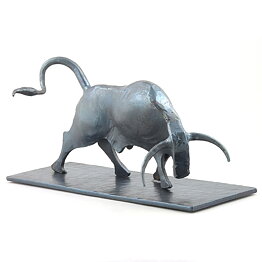
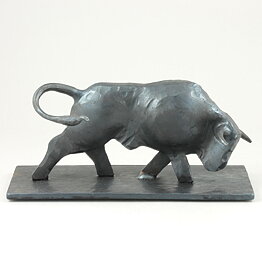
Bull sculpture from Strömbergshyttan in 1992
Glass Comeback in the 1980s
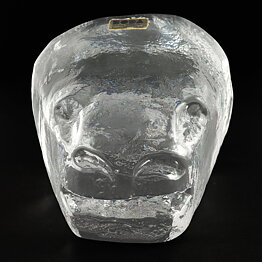
Erik Höglund returned to glass design in the 1980s. This time, he worked for smaller glassworks in Sweden like Pukeberg, Transjö, Åhus, and Vrigstad. Most well-known from this period is the art glass from the Strömberghyttan glassworks. The forceful and strong-colored animal heads are very popular among collectors of today.
Erik also spread his international wings during this period. He taught at Pilchuck – an international center for glass art education in the USA – in 1981. In the early 1990s, he designed colored glass for the Nový Bor glassworks in the Czech Republic.

Drinking glass from Strömbergshyttan in 1992

Erik in the late 1980s with Strömbergshyttan art glass in the background
Epilogue
Erik Högund's health deteriorated in the 1980s and 1990s but he kept working as an artist until his death in 1998. The last years, he mainly painted surrealistic and dreamlike scenes. His wife concluded:
| "The weaker Erik gets during his illness, the more powerful the colors and the artistic expression will be. The disease seems to require an explosion in color.” |
Today, the interest in Erik Höglund's artistry is solid, and many Swedish homes are adorned by one or more of his objects. The "Erik Höglund collection" in the Blekinge Museum in Karlskrona is well worth a visit by glass lovers all over the world.