
Oiva Toikka – Glass from Iittala and Nuutajärvi

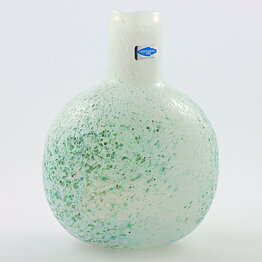
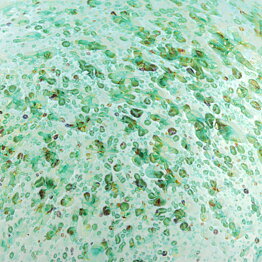
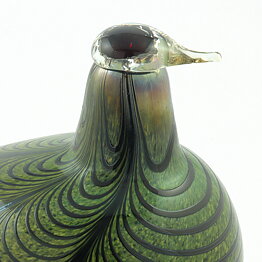
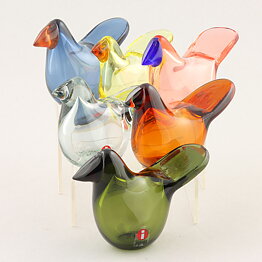
Oiva Toikka (1931–2019) is one of the world's leading glass artists. His imaginative, colorful and bold art deviates from the common streamlined aesthetic of Nordic design. Find your favorite among Oiva’s birds and art glass from Nuutajärvi and Iittala, or learn more about him by reading the biography.
| "The glass-making process is a challenge and keeps people alert. You can’t fall asleep and be satisfied." |



















Oiva Toikka – A Short Biography
An Artist's Childhood
Oiva Toikka (1931-) was born on a farm in Viipuri in eastern Finland (now part of Russia). As a child, Oiva was inspired by the area’s rich and vibrant folklore. He attended the Institute of Industrial Arts in Helsinki in 1953–56 and 1959–60.
As a student in the ceramics department, Oiva tried to break free from the constraints of the predominant idea of functionalism. He was more interested in the sculptural possibilities that clay had to offer. His objects were often decorated with stylized and humorous figures, reflecting his keen interest in peasant culture. Other pieces from the period resembled prehistoric relics or Greek and Roman antiquities.
| "It has never been my thing to play safe. There are enough perfectionists around." |

Oiva Toikka during an Arabia exhibition (1958)

Faience fish, student work (1956)
The Arabia Years 1956–1959
After graduation, Oiva Toikka was hired by the Arabia porcelain factory in Helsinki in 1956. Initially working in different departments of the factory, he was soon transferred to its famed Art Department. By this time, Arabia was overwhelmed with distinguished artists like Toini Muona, Birger Kaipiainen, and Rut Bryk.
The artists at Arabia represented two distinct lines of work: traditional potters and proponents of a free and sculptural approach. Oiva chose the freer path, despite having trained under Elsa Elenius, a fine representative of the classic tradition.

Stoneware vase for Arabia (the late 1950s)

Chamotte horse for Arabia (1958)
Oiva’s first solo exhibition in 1958 was widely noted. He displayed distinctive, sturdy human and animal figurines of chamotte that included a good deal of humor. Attached to the rectangular bodies were separately made legs, heads, and tails. Oiva’s expression was boldly impulsive and flouted convention.
In the newspapers, he was praised for his naive impression that was archaic and modern at the same time. In the Finnish art world, Oiva’s work was regarded as a welcome and refreshing addition. He worked for Arabia for three years, before a period as an art teacher in Sodankylä in the north of Finland in 1960–63.
| "I have never had any intention of being revolutionary in my work. I have just done what felt right." |
Arriving at Nuutajärvi Glassworks
Oiva Toikka started working for Nuutajärvi – Finland’s oldest glassworks – in 1963. In the beginning, he did not want to be known as a designer. He preferred to be called “an artist who also designs”.
At the time, Nuutajärvi radically renewed its range of pressed glass products. Oiva, therefore, designed the Kastehelmi (Dew Drop) series, so named because of the circles in the pressed glass.
| "A pressed item feels quite heavy. I wanted to lighten it up by bringing relief into it. The pattern came from the image of a pearl with its beautiful shape." |

A bowl from the Flora series (1966)

A dish from the Kastehelmi series (1964)
Oiva quickly became one of the more prominent designers at Nuutajärvi. The Kastehelmi (1964) and Flora (1966) series became huge commercial successes. In the late 1960s, Nuutajärvi was producing 18 series designed by Oiva, including tableware, glasses, carafes, vases, candlesticks, and bowls. The Kastehelmi series was in production for more than 20 years. In 2010, it was reintroduced to celebrate Oiva’s 50 years of work with the company.
The Friendship with Kaj Franck
When Oiva Toikka arrived at Nuutajärvi, Kaj Franck (1911–1989) was the artistic leader. Kaj was already known as the leading figure of Finnish design. They became the best of friends despite their different personalities and considerable age difference.
| "We were good friends, and sometimes we engaged in the craziest things just like a couple of children." |
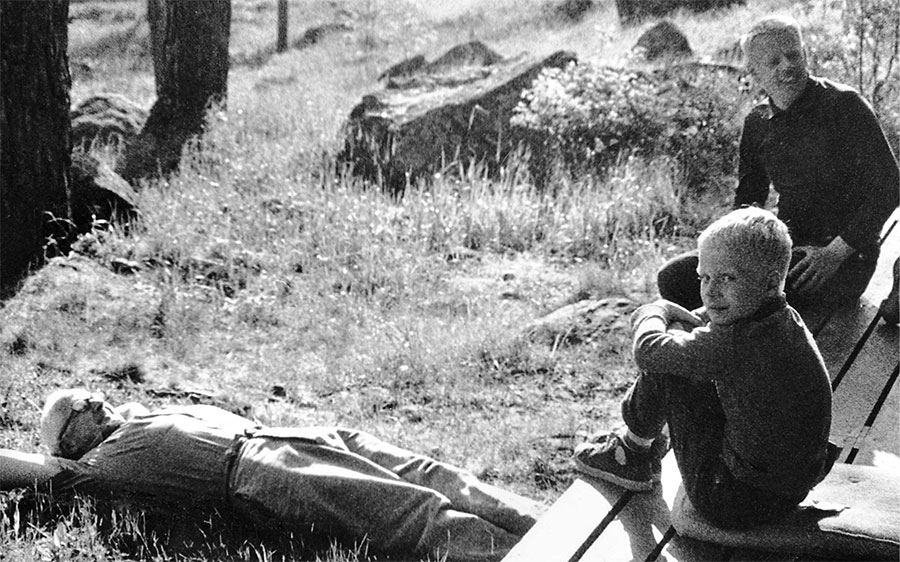
Kaj Franck (left) and Oiva Toikka (right) enjoying the Finnish summer in the 1960s
Art Collection
In addition to making pressed glass products, Nuutajärvi had a long tradition of crafting high-quality glass art. In 1975, the Art Collection was launched, consisting of objects made in limited editions. In the making of objects for this collection, the glass blower received a large degree of freedom in the design. There was a definite basic form, but it was the craftsman's skill and feeling that completed the work.
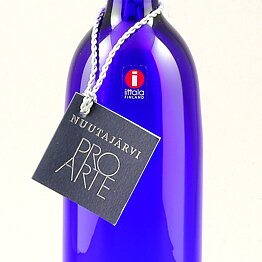
During the 1980s, the Finnish glass industry began to change strategies at an ever-faster pace. In 1981, the 300th anniversary of the Finnish glass industry, the Art Collection was renamed Pro Arte. Unique pieces made for exhibitions were often used as models for this series.

Oiva Toikka at the Nuutajärvi glassworks (2000s)

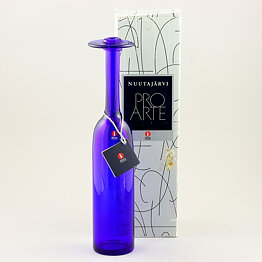
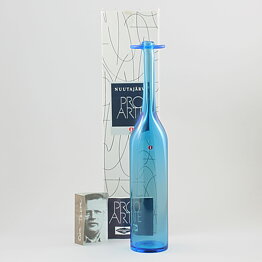
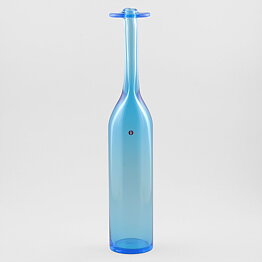
Limited decanter ”Oz” from the Pro Arte series (1995)
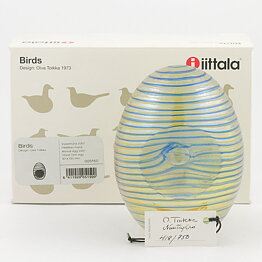
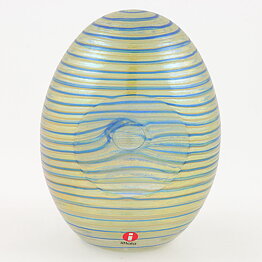
Annual Cubes
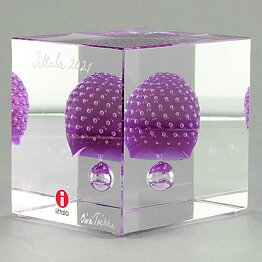
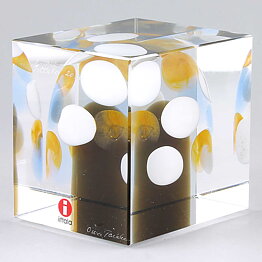
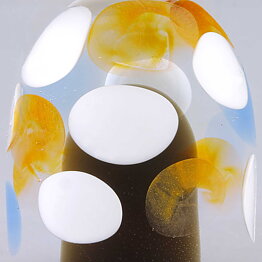
In 1977, Oiva introduced his first of an annual series of cubes at Nuutajärvi. Finnish glassworks had made similar but simpler pieces , though mostly as demonstrations of skill by glassblowers. Oiva already knew the cube technique from his work with the Lollipop sculptures in the late 1960s. Cut on all sides, the annual cubes were quite expensive. For this reason, some doubted they would sell in significant numbers. However, they have been an enduring success.
(Please visit our complete overview of Oiva Toikka’s annual cubes.)

”Lollipop” sculpture (the late 1960s)

Year cube of 1991
Birds – Glass on Wings
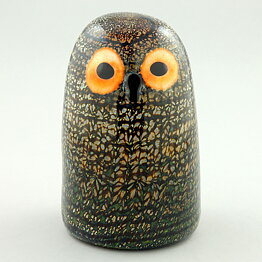
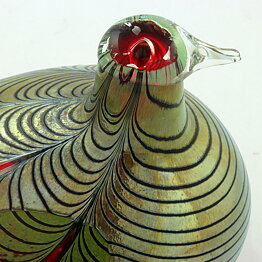
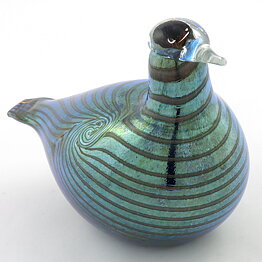
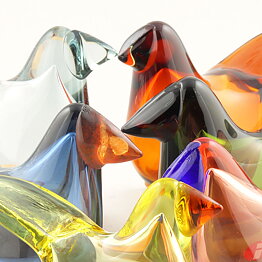
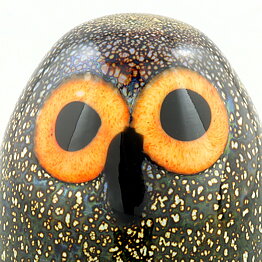
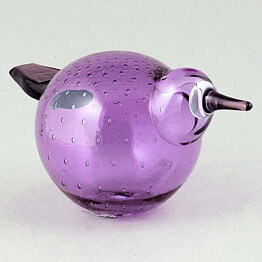
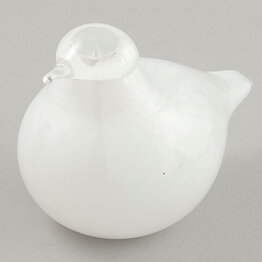
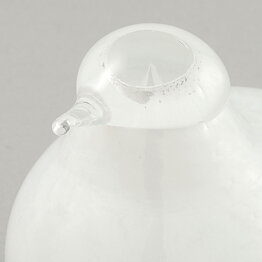
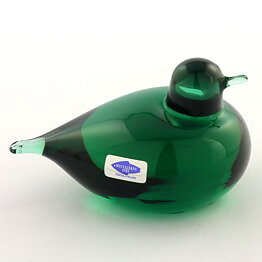
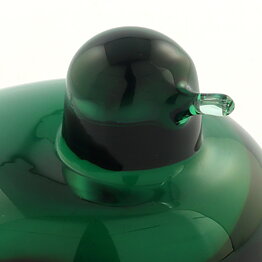
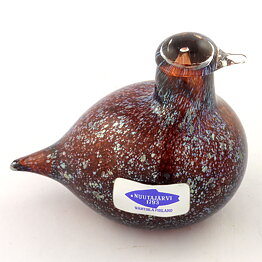
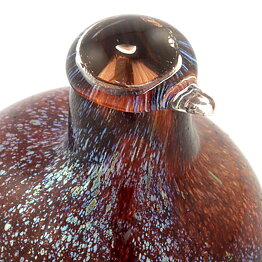
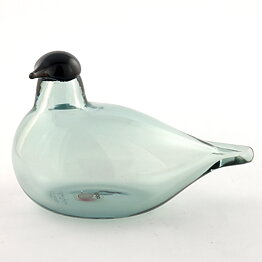
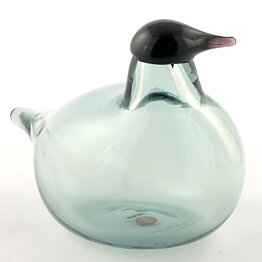
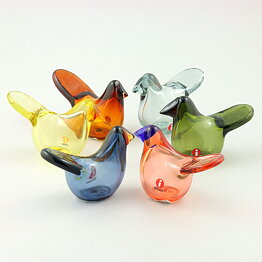
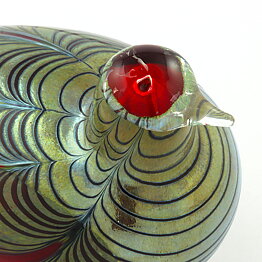
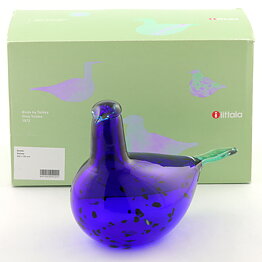
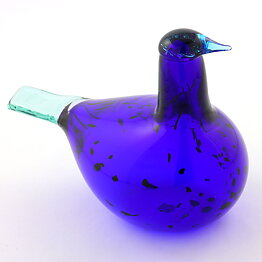
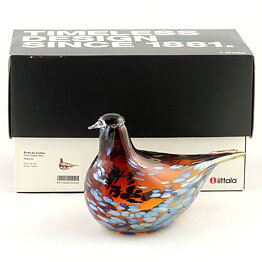
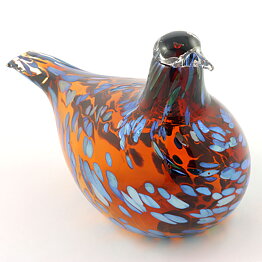
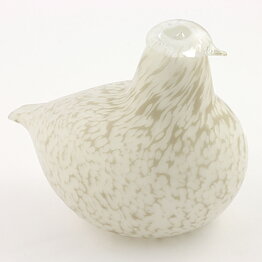
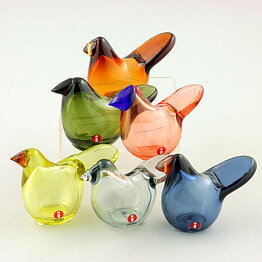
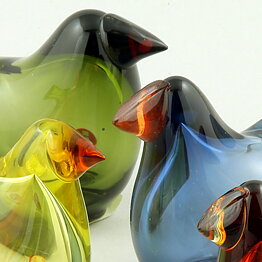
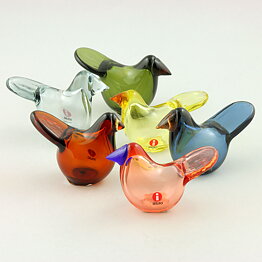
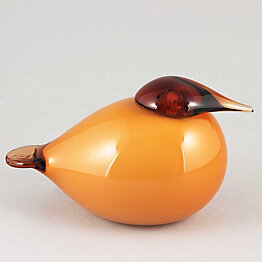
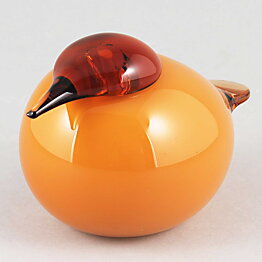
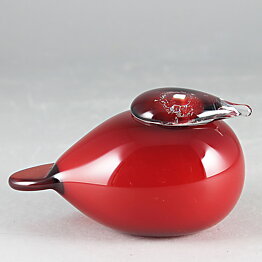
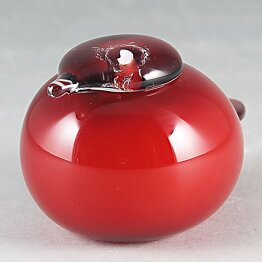
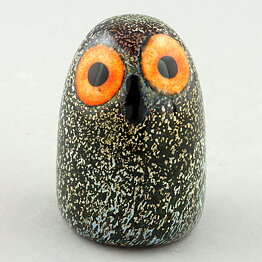
Oiva Toikka’s birds have become well-known symbols of Nordic glass design. The first bird can be seen inside his "Lake Palace" sculpture from 1969. The bird is reminiscent of the "Flycatcher" (Sieppo), the first of Oiva’s birds to enter production in 1972.
| ”Every bird has its own expression. The deviations make each bird one of a kind.” |
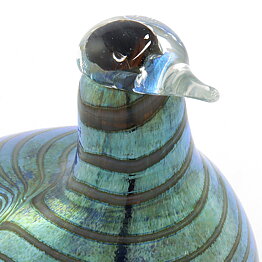
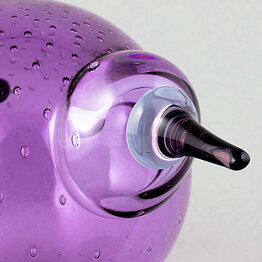
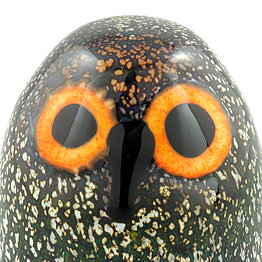
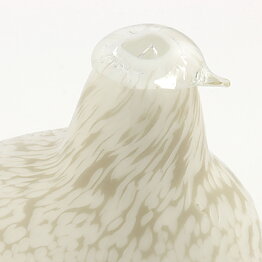
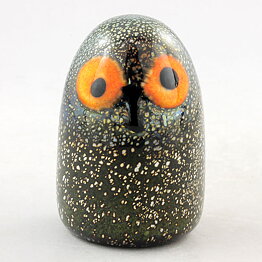
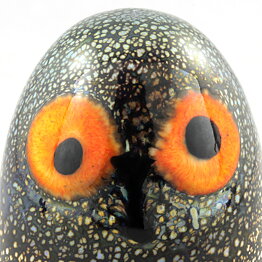
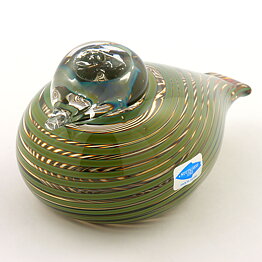
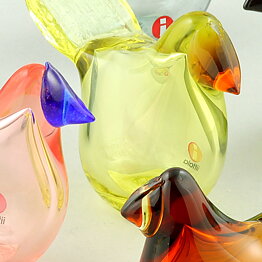
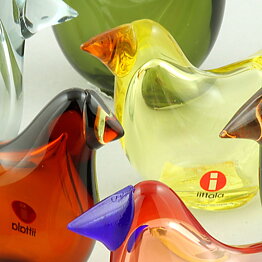
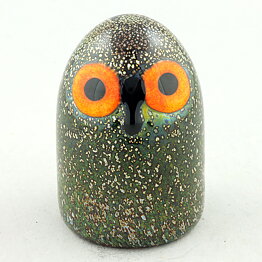
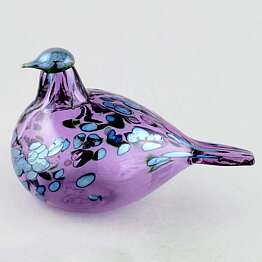
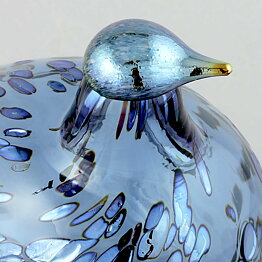
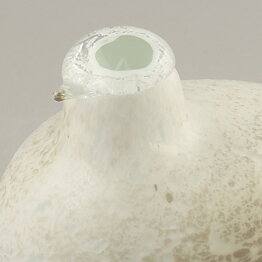
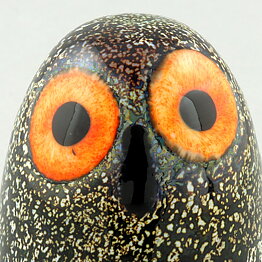
Over the years, more than 300 species have been created. Each bird is a unique individual, signed with the artist’s name as well as the name of Nuutajärvi or Iittala. The vast collection of glass birds embodies a rich fusion of mouth blown glassmaking traditions.

Sieppo (Flycatcher) bird (1972)

Bird production at the Nuutajärvi glassworks
Oiva knows and works closely with the craftsmen at Nuutajärvi who produce his pieces, and they know him equally well. Each working session is unique, and failures and misunderstandings often lead to new inventions and ideas. Oiva is often asked about his fascination with birds. He always answers that he finds their fluid form ideally suited to being represented in glass.
(Please visit our complete overview of Oiva Toikka’s annual birds.)
Oiva Toikka's Artistic Expression
Oiva Toikka stands apart from the group who created the “Golden Age” of Finnish design in the post-war years: Timo Sarpaneva, Tapio Wirkkala and Kaj Franck. These three sought clarity in shape that was as timeless, organic and “cool” as Scandinavian nature, their primary source of inspiration.
Oiva, on the other hand, took his inspiration from folk art, antiquity and distant cultures. He longed for color and excitement, finding modernism and his seniors’ “good taste” constraining. Oiva started experimenting with different methods and let the material and the theme lead him.

Glass sculpture (the 1970s)

Glass Vase ”Pompom” (the 1960s)
An unsatisfactory piece will become a prominent feature in a new work. Oiva does not throw anything away but instead picks from the archives of his “mistakes” necessary elements for the ever-renewing range of his art.
| ”I have always been at the borderline of taste. It is an entertaining neighborhood.” |
Unique Art Glass
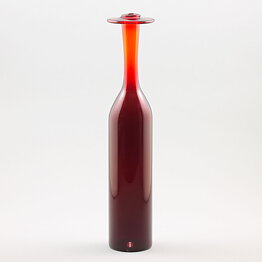
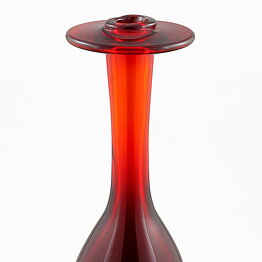
Oiva Toikka’s unique production comprises more than 60 years of artistry. He is very clear about the distinction between designing for companies and free artistic creation. His unique works of art express a more personal vision that is unfettered by commercial restraints. The expression is often whimsical, contradictory, extravagant, and playful. Spontaneous fancies are valued higher than perfectionism.
| "The crafting of a good piece of glass gains greatly from the full employment of our creative functions. The broader the intellectual channels, the greater the chance of producing something new and right." |

Unique glass sculpture (the 1970s)

Unique glass sculpture ”The Three Sisters” (1990)
The Pottery Years in Sweden 1986–1993
In 1986, Oiva Toikka renewed his professional contact with ceramics. He participated in the Swedish company Rörstrand's 260th-anniversary project with his tureen designs. Collaboration with Rörstrand continued already in the following year. Toikka presented a collection of unique pieces, which were decorated with cobalt-blue hand-painted visual motifs. In these pieces, the traditional decorative color of pottery was combined with fantastical modern visual themes.
In 1989, Rörstrand began to produce Signe Persson-Melin's tableware service with Oiva's Cobolti motif. The rich and varying pattern covered the whole surface of the pieces. The Cobolti pattern stood in stark contrast to the reduced and simplified decorations that were popular at the time. Oiva left Rörstrand in 1990 and worked for three years at the University of Arts, Crafts, and Design in Stockholm.

Porcelain Cobolti tableware series from Rörstrand (1989)

Unique red clay tureen from Rörstrand (1986)
The Finnish Glass Nestor
Oiva Toikka was still active as a creative artist until he passed on in 2019. His last base was Iittala glassworks, which merged with Nuutajärvi in 1988. At the glassworks, some of Finland’s most famous designers have their studios.
Oiva has garnered numerous honors and awards, including the Lunning Prize, the Kaj Franck Design Prize, and the Pro Finlandia Medal. The Helsinki University of Art and Design made Toikka an art professor in 1993, and, in 2003, they elected him as an honorary fellow. A true Nestor of Nordic glass!

Oiva Toikka at lake Rutajärvi in 2008

Glass fish 1990s