
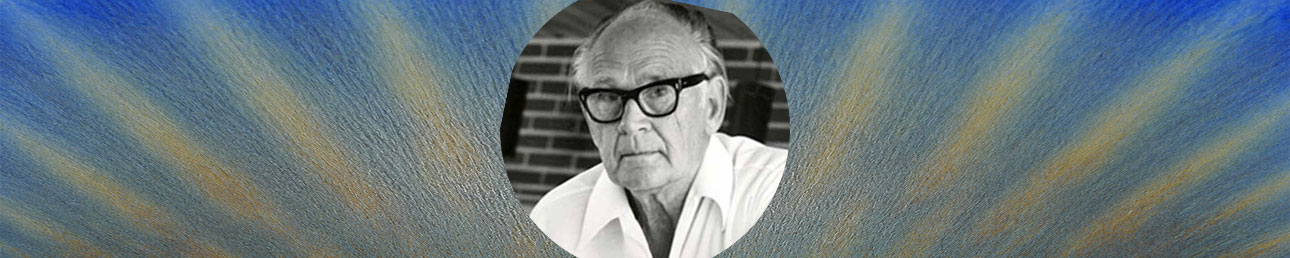
Berndt Friberg – Ceramics from Gustavsberg



Berndt Friberg – A Short Biography
The early years
Berndt Friberg (1899-1981) was born in the southern Sweden town of Hoganas. He came from a long line of ceramists, in an area steeped in the tradition of finely crafted pottery. Berndt started working at the nearby Hoganas ceramic factory when he was only 13 years old.

Throwers at Höganas ceramic factory

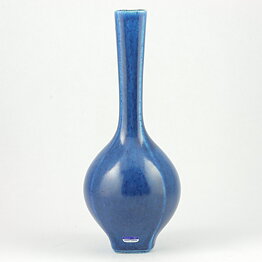
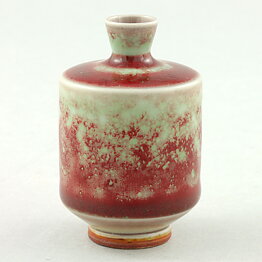
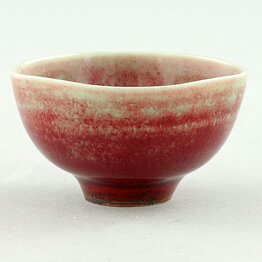
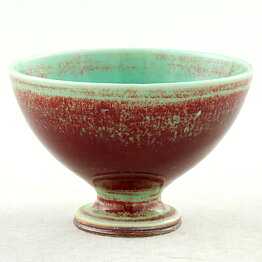
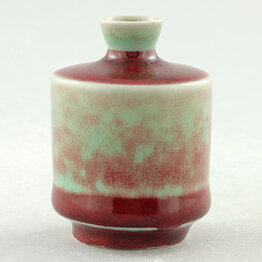
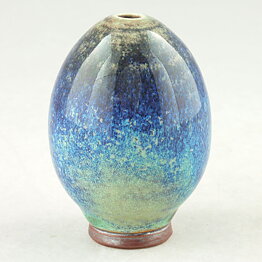
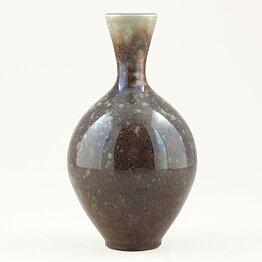
Vase with oxblood glaze from 1969
Berndt was fortunate to inherit his grandfather's turntable and to receive training from a talented uncle. He was a quick study, exhibiting innate artistic skill and a strong work ethic. During his 18 years at Hoganas, he became quite an accomplished thrower. In 1934, he was hired by the prestigious Gustavsberg ceramic factory in Stockholm.

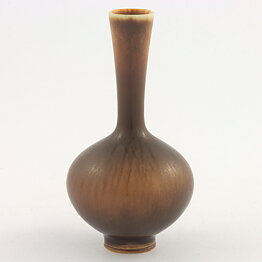
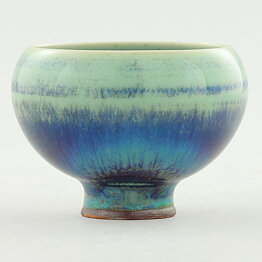
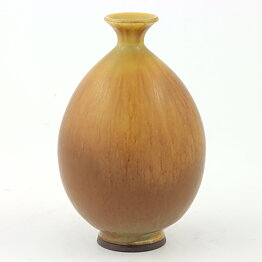
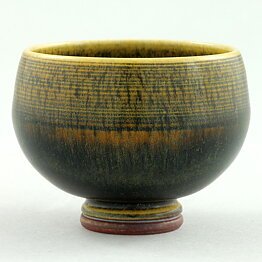
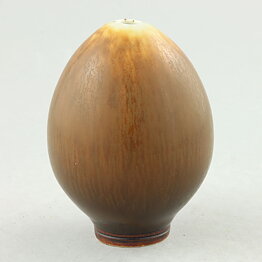
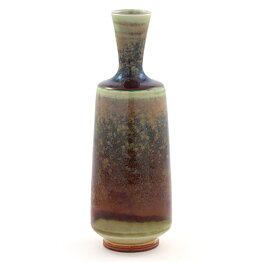
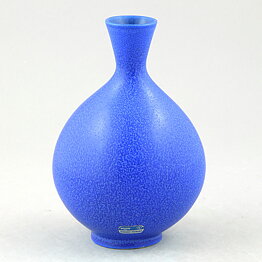
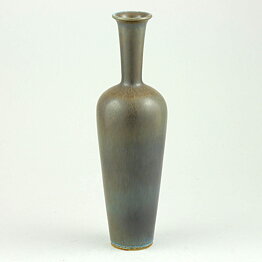
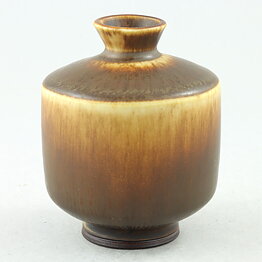
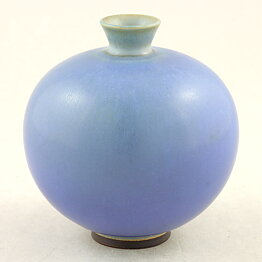
Vase with brown and blue haresfur glaze

Berndt with artistic leader Wilhelm Kage and Stig Lindberg in the late 1930s
Arriving to Gustavsberg
During his first years at Gustavsberg, Berndt Friberg worked as a thrower for the legendary artistic leader, Wilhelm Kage. Berndt's arrival was marked by a significant increase in the quality of Kage's art pieces. Soon enough, he became the undisputed master thrower at Gustavsberg. Through his early career, Friberg wasn't known for his artistic ambition. His artistic debut wouldn't come until the age of 42, when he exhibited in Stockholm with other Gustavsberg artists.

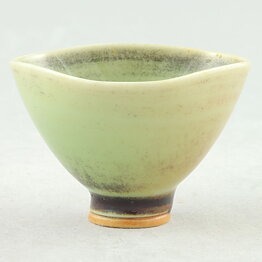
Miniatures in the hand of Berndt

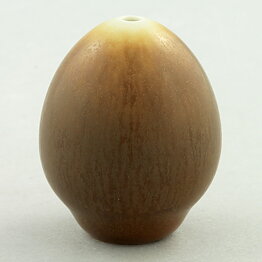
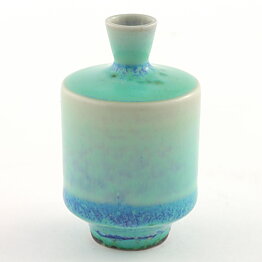
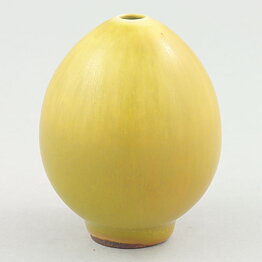
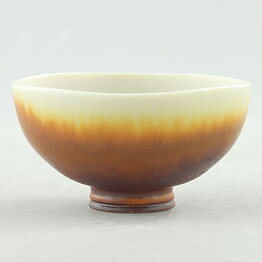
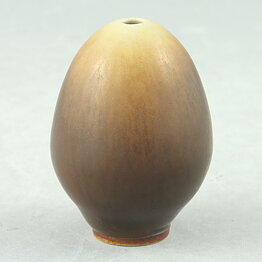
Miniature vases from 1958
Perfectionist by heart
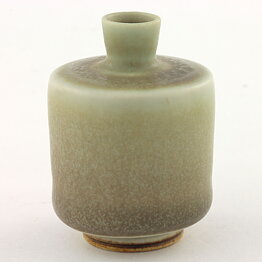
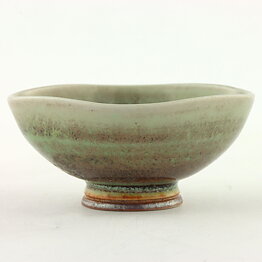
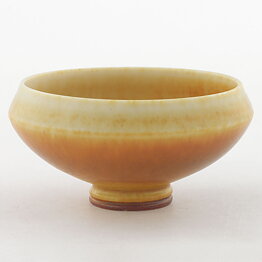
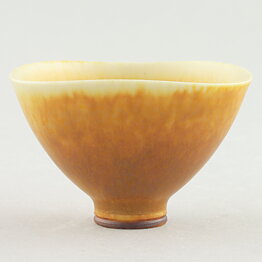
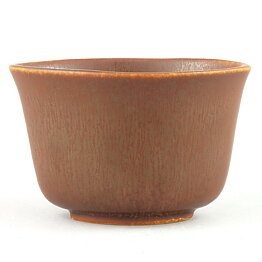
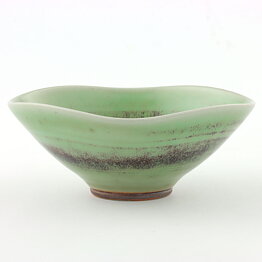
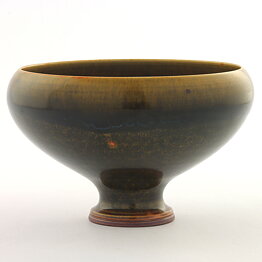
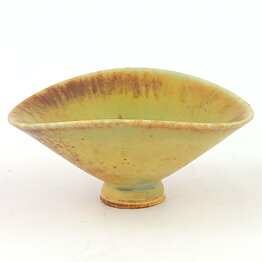
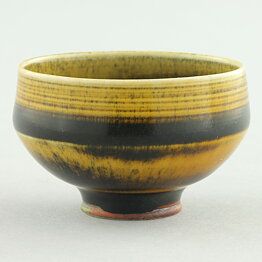
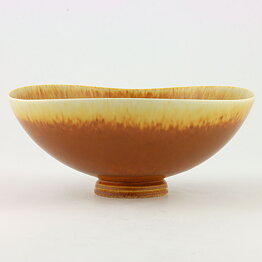
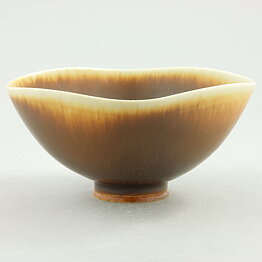
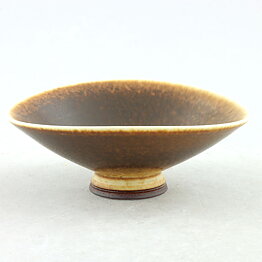
Berndt Friberg became known as a perfectionist with an eye for delicate, sensuous forms and magnificent glazes. His works ranged in size, from no higher than a few centimeters to large floor vases. The contours were reminiscent of classic styles, including Chinese stoneware from the Song Dynasty.

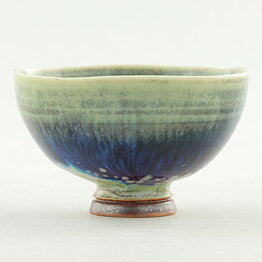
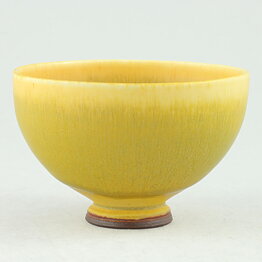
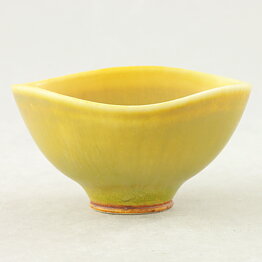
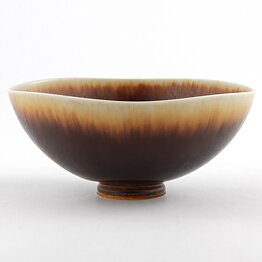
Gently quadratic bowl with glossy glaze from 1965

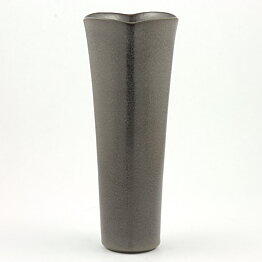
Berndt presenting a majestic vase in the 1970s
Rising success
At the age of 52, Friberg had his first solo exhibition in Gothenburg, which was well-received. Even the Swedish King Gustav VI Adolf became an avid collector of Fribergís work, acquiring more than 100 pieces. The demand for Friberg's work soon eclipsed supply. Every one of his pieces was sold.

Berndt Friberg at the throwing wheel in the 1970s

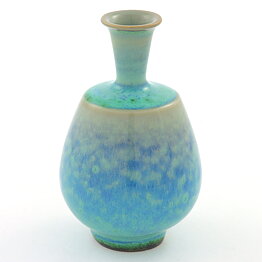
Swelling vase with aniara glaze from 1969
Master of glazes
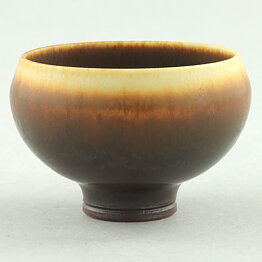
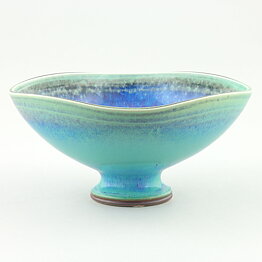
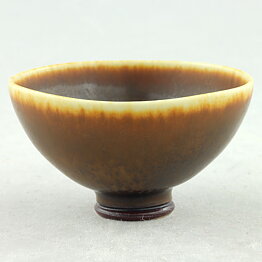
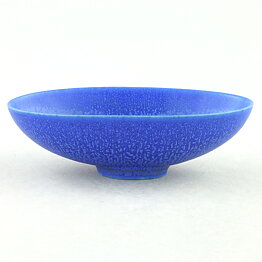
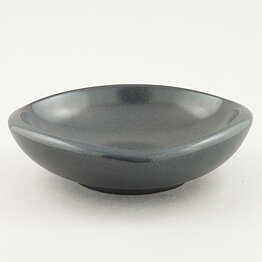
Berndt Friberg constantly refined his glazes, recording the details in his famous "black book". Early glazes were often matte delicate hare's fur glazes. During the 1960s, the glossy glazes "ox blood" and "aniara" became more dominant. Berndt remained at Gustavsberg until his death in 1981, leaving behind a legacy of brilliant ceramic craftmanship.
Berndt Friberg – Signatures
Berndt Friberg's signatures and marks on his unique production could be quite hard to interpret. Between 1939 and 1981, Berndt marked his unique production in four different ways.

1. Berndt Friberg's unique objects from 1939–1944. Relief stamp with the Gustavsberg anchor and "Ankargods" (Anchor Ware). Stylized incision "BF".

2. Berndt Friberg's unique objects from 1944–1947. Relief stamp with the Gustavsberg studio hand and "BF".

3. Berndt Friberg's unique objects from 1948–1974. Incised signature "Friberg", production year letter mark, and Gustavsberg studio hand.

4. Berndt Friberg's unique objects from 1975–1981. Incised signature "Friberg", production year, and Gustavsberg studio hand.
During the 1948–1974 period he used the following year marks:
R = 1948
S = 1949
T = 1950
U = 1951
V = 1952
X = 1953
Y = 1954
Z = 1955
Å = 1956
Ä = 1957
Ö = 1958
A = 1959
B = 1960
C = 1961
D = 1962
E = 1963
F = 1964
G = 1965
H = 1966
I = 1967
J = 1968
K = 1969
L = 1970
M = 1971
N = 1972
O = 1973
P = 1974
Q = 1975
That wasn’t so hard, was it?
Friberg’s World of Shapes
The exquisite forms of the unique vases were developed over the many years of his career. In the book ”Berndt Friberg keramiker” (Berndt Friberg, ceramist) from 1964, he brought together the majority of these shapes into ceramic families with unifying features. Here they are!
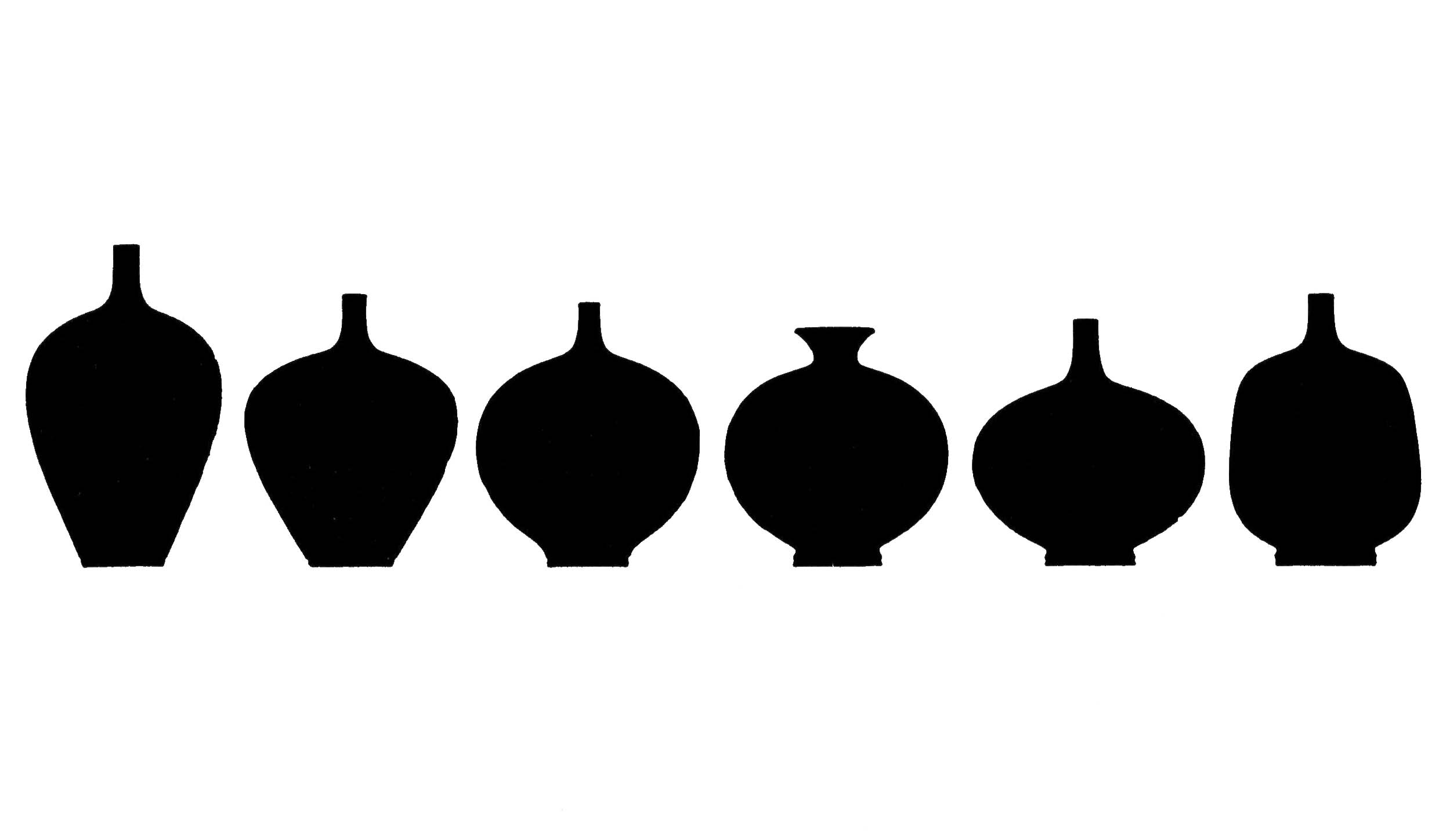
Ceramic family 1
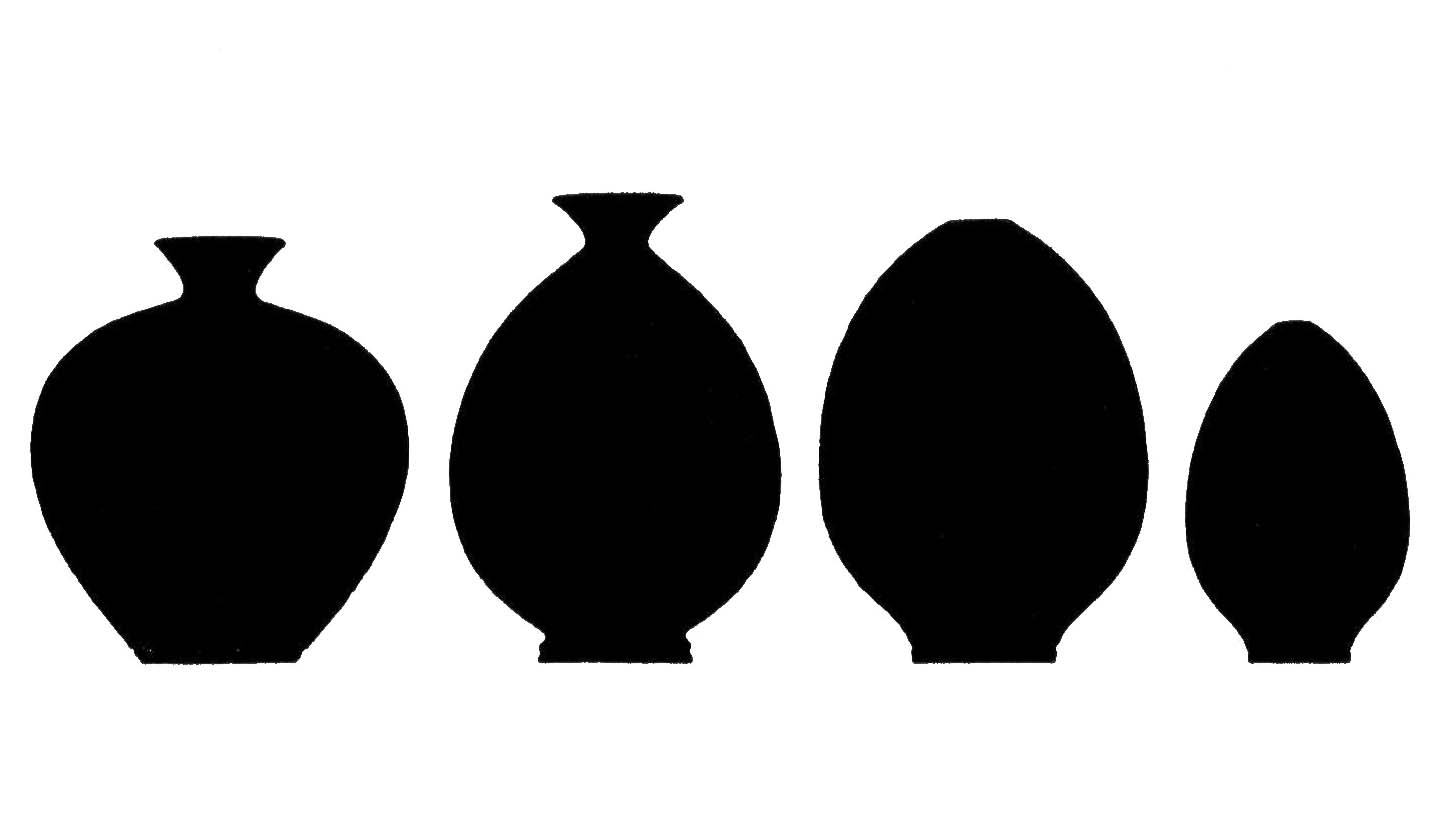
Ceramic family 2
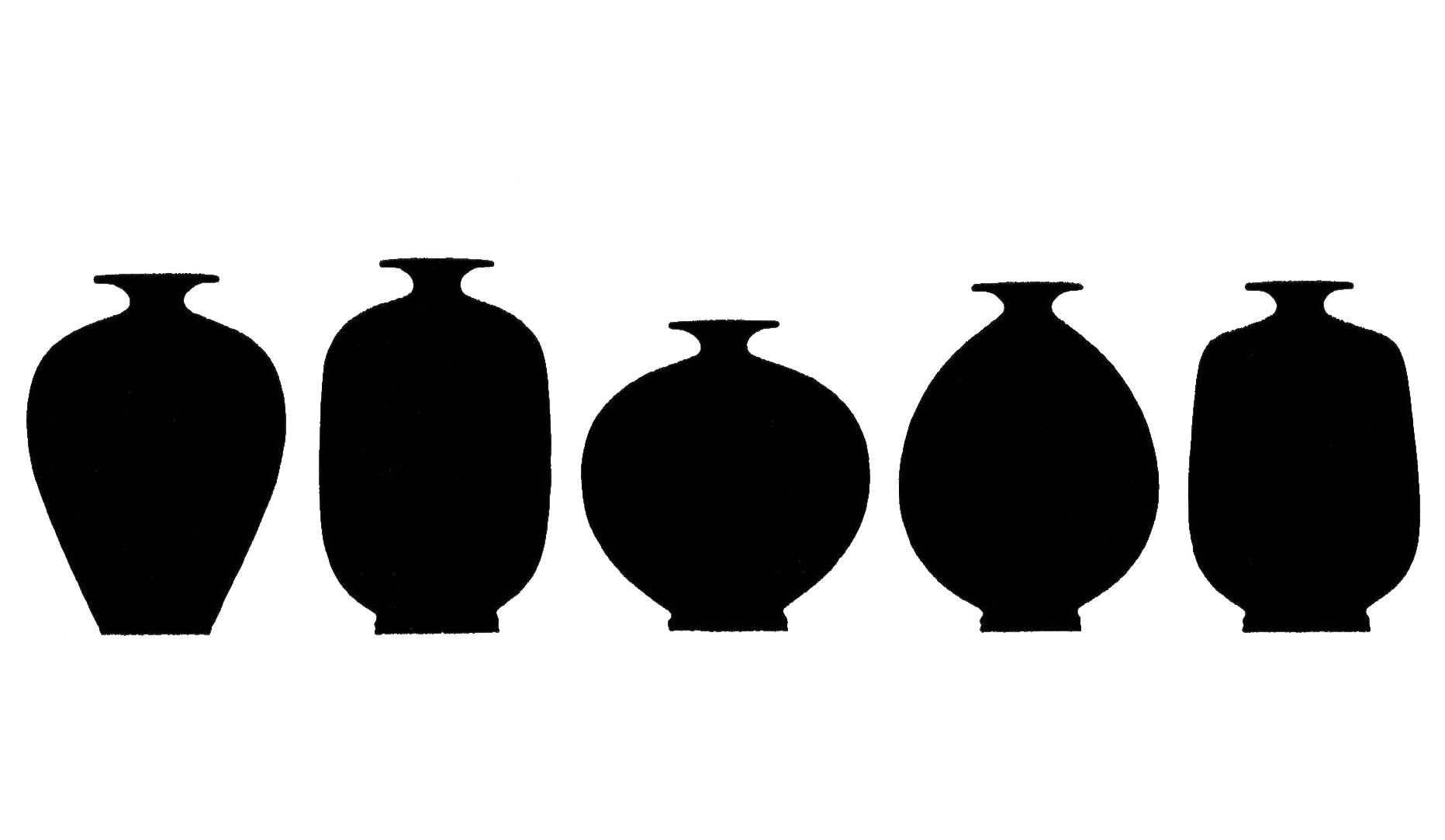
Ceramic family 3

Ceramic family 4
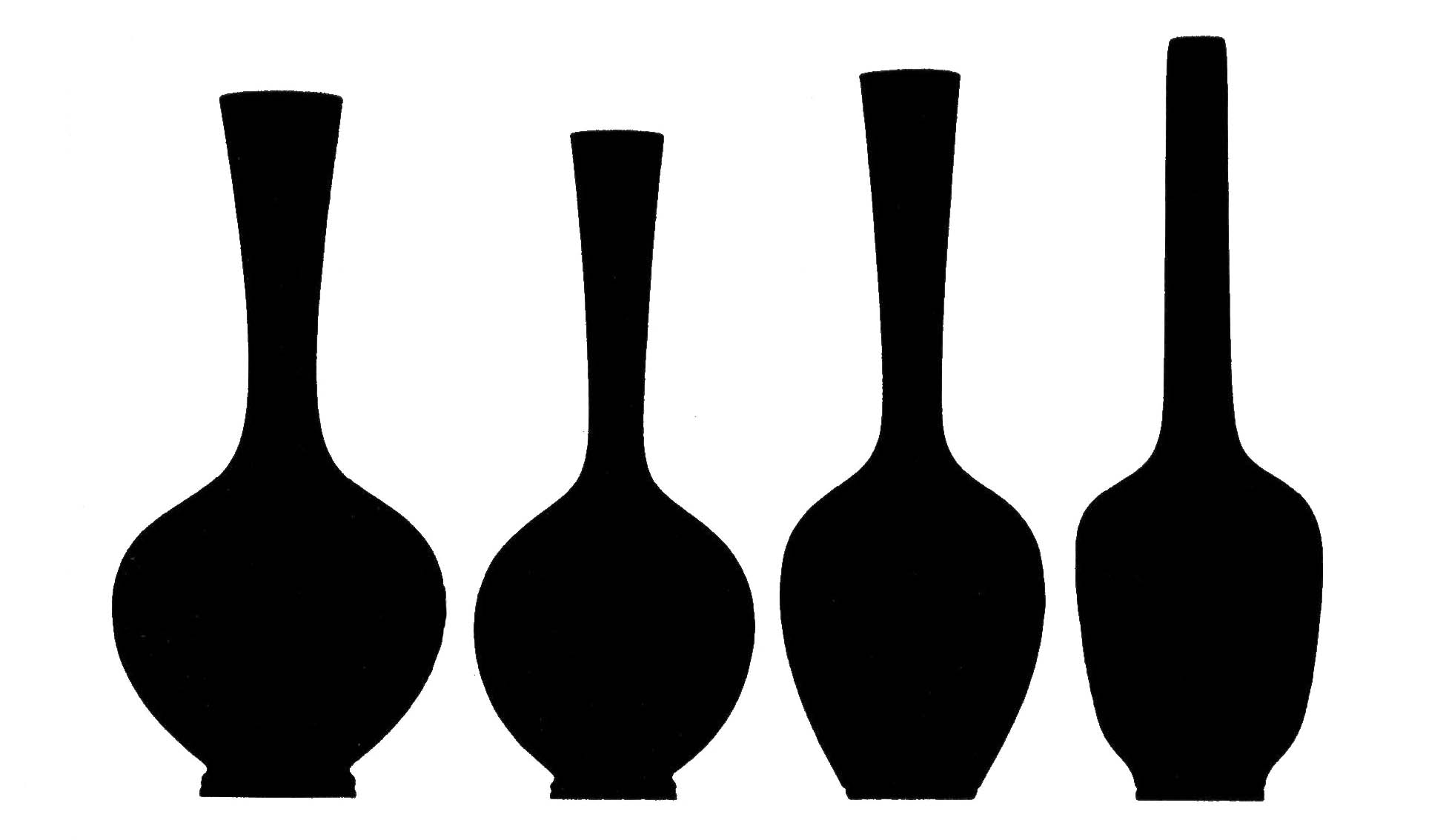
Ceramic family 5
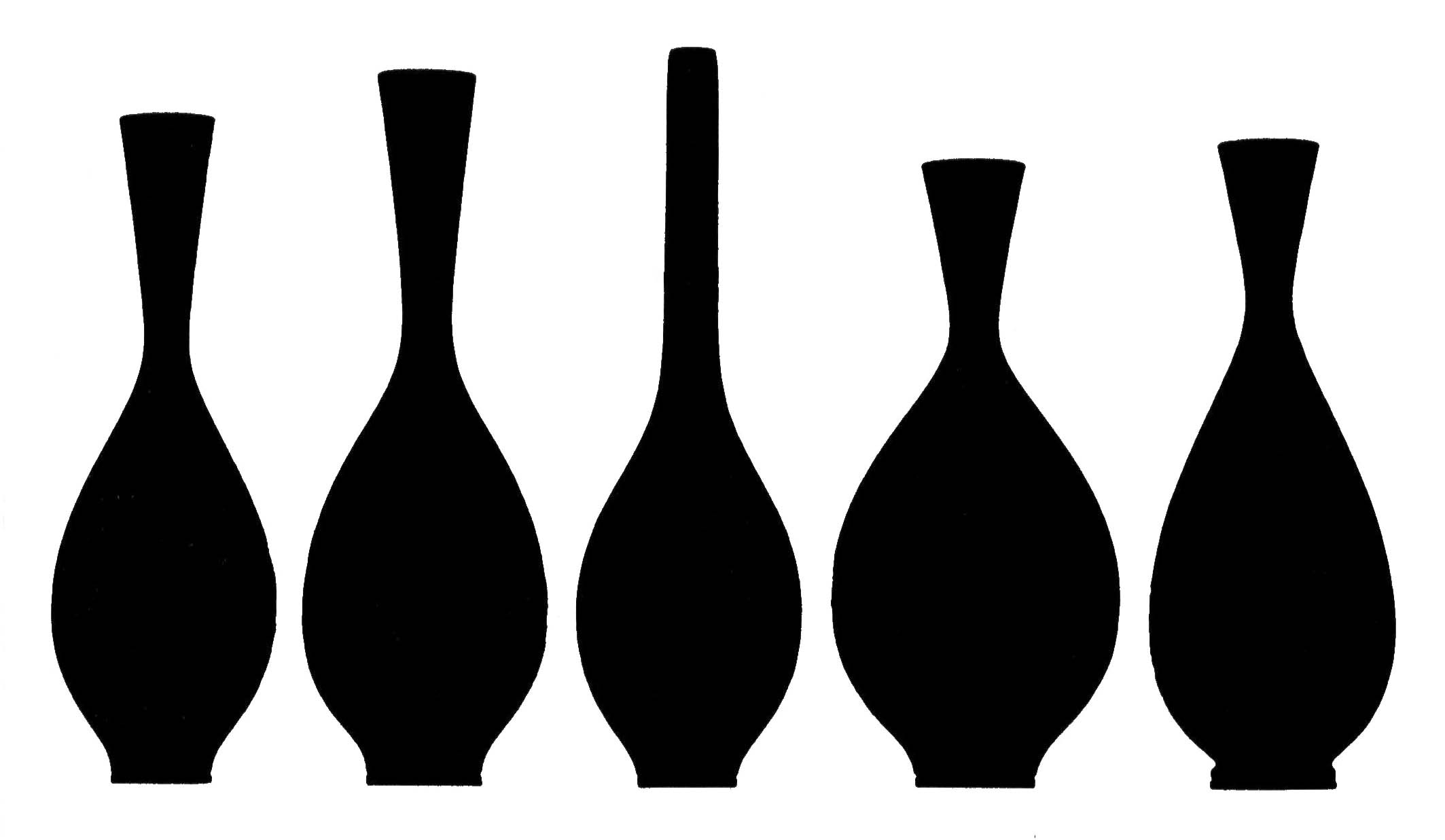
Ceramic family 6
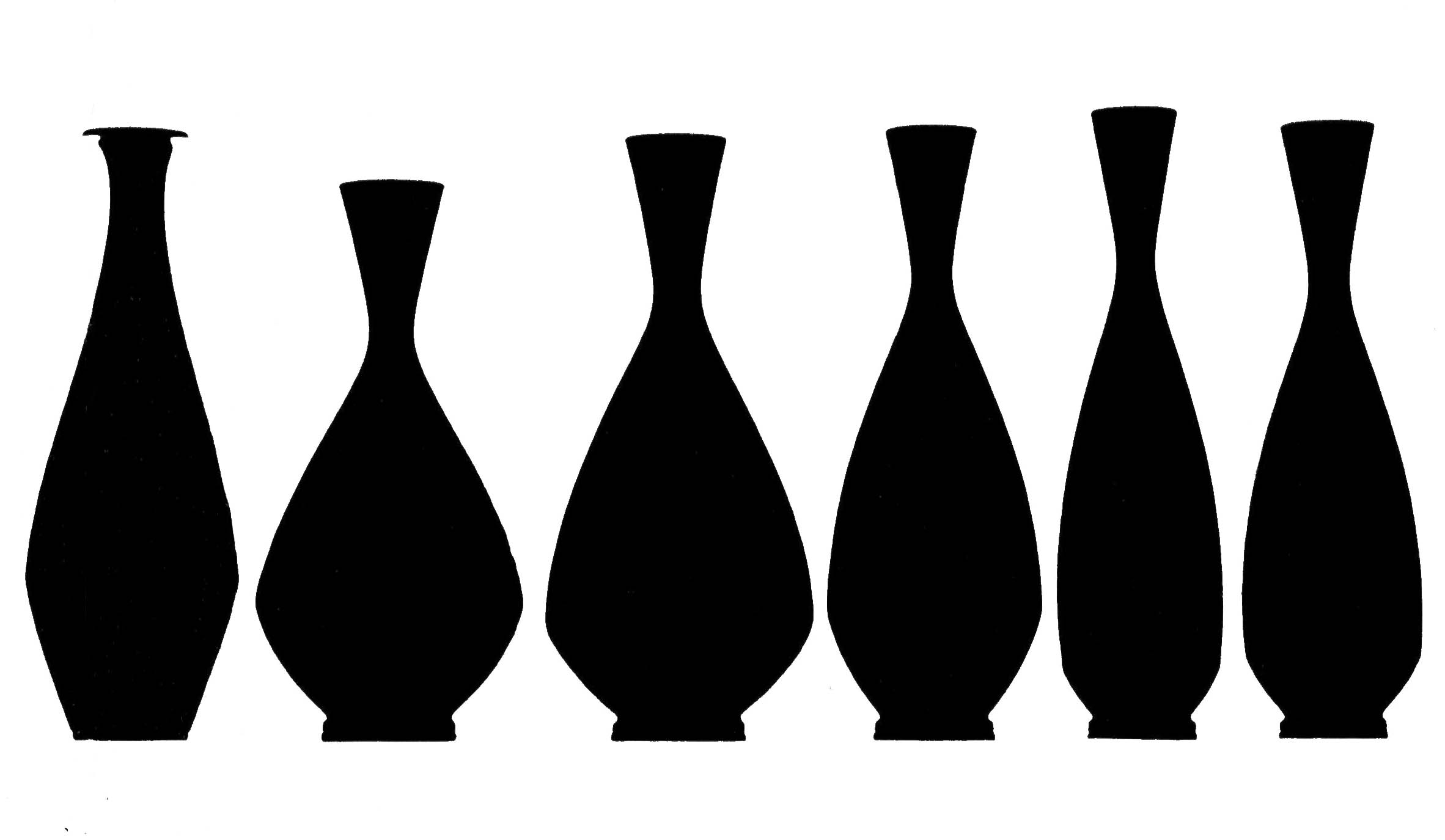
Ceramic family 7
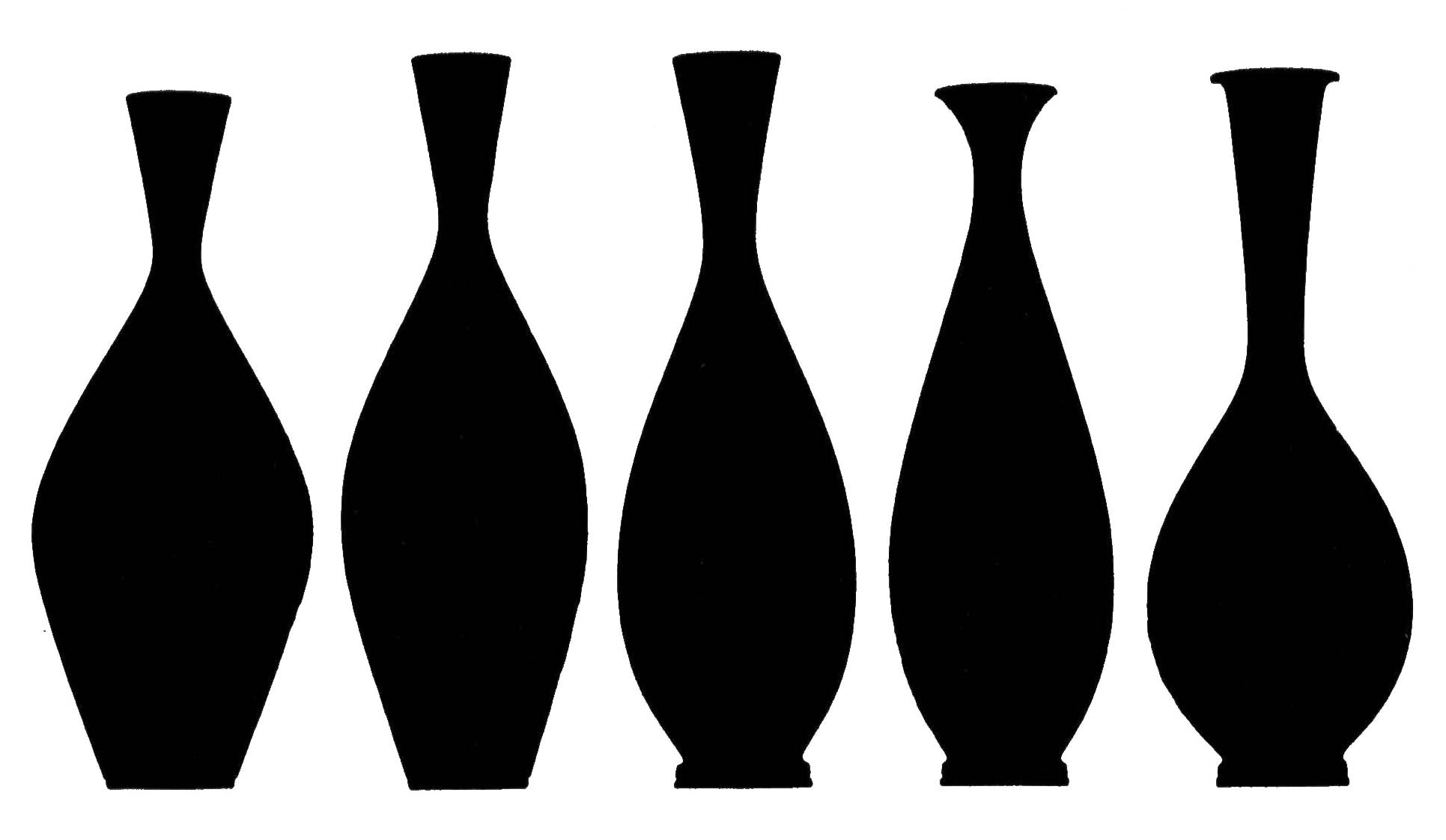
Ceramic family 8
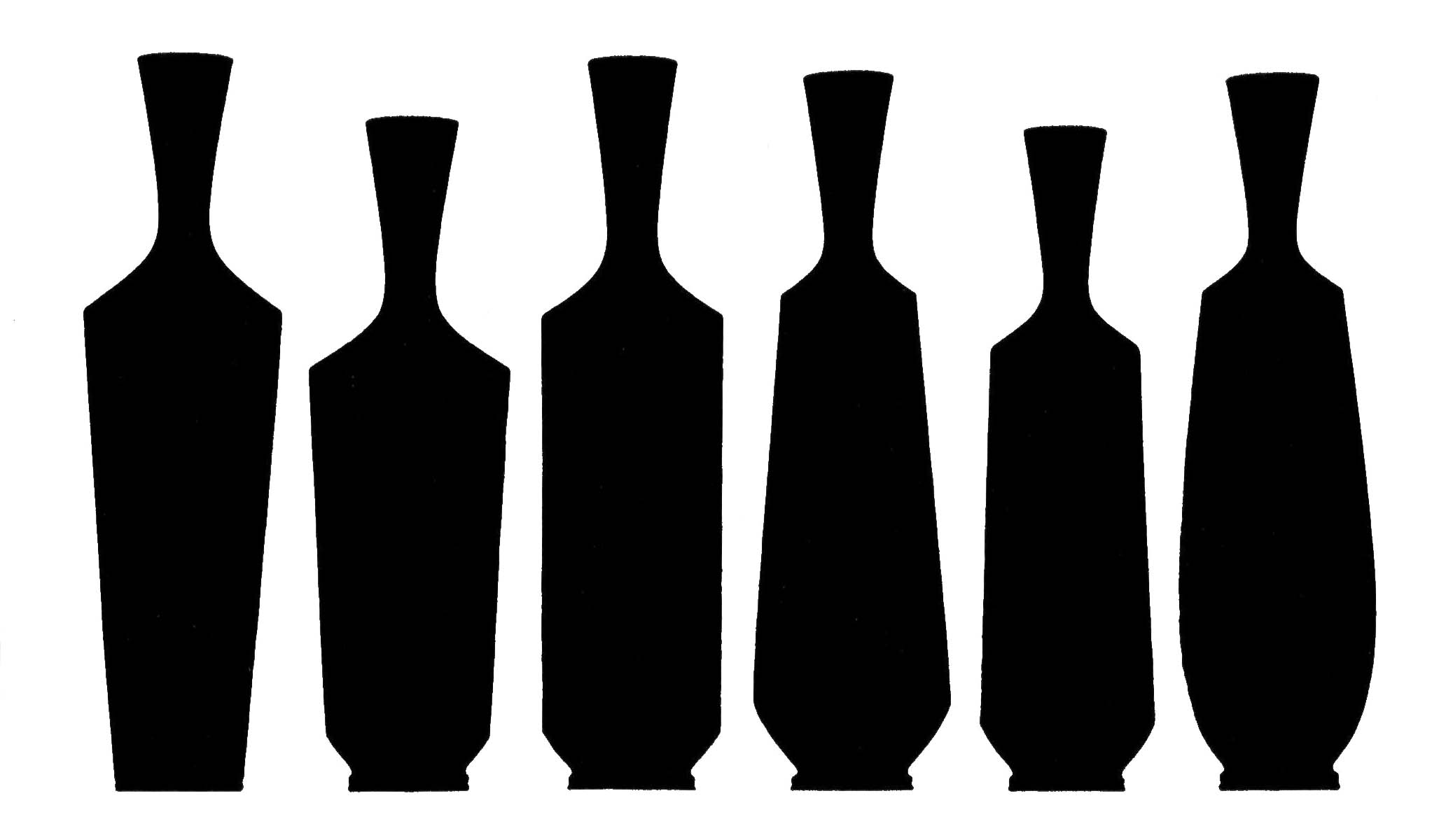
Ceramic family 9

Ceramic family 10
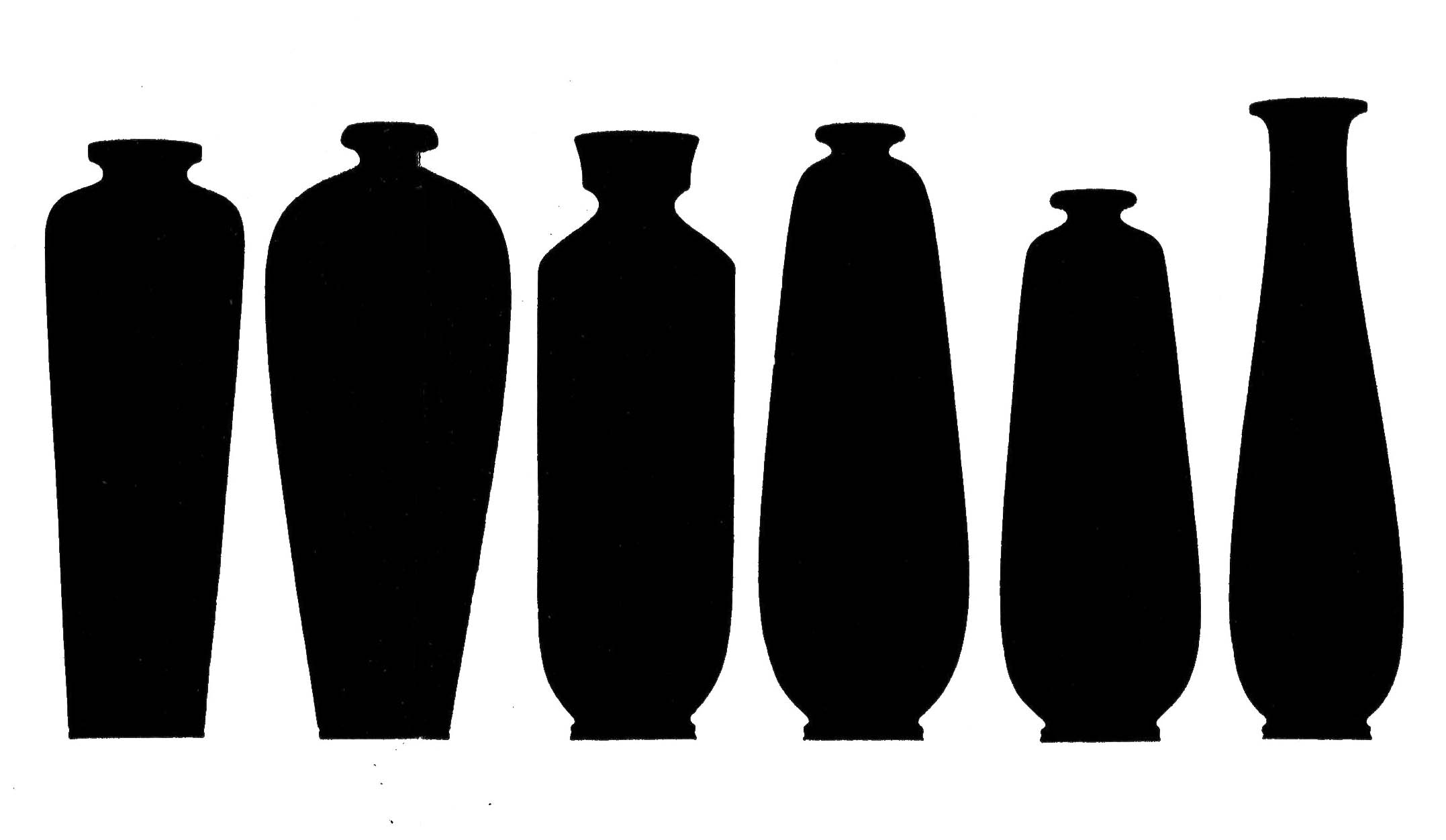
Ceramic family 11
Berndt Friberg at the throwing wheel

This video shows Berndt Friberg at the throwing wheel in the Gustavsberg studio. The short sequence is from the movie "Eld, Lera och Människor" (Fire, Clay, and People) in 1942.