
Nordic Glass
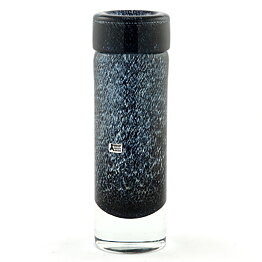
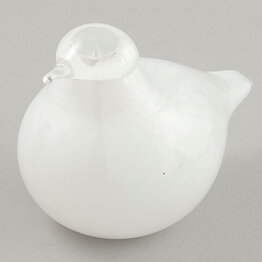
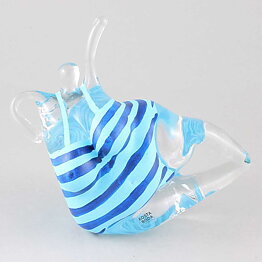
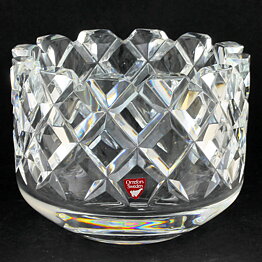
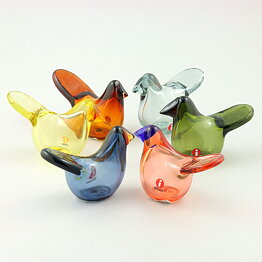
Glass is well represented in the illustrious Scandinavian design of the 20th and 21st century. Over the years, companies like Iittala, Kosta-Boda, and Orrefors have presented numerous classics in this field of design. Which Nordic glass design is your favorite?









An Overview of Techniques in Nordic Art Glass
Nordic art glass achieved great success during the 20th century. At Kosta, Iittala, Orrefors, and other glassworks, artists were employed early on to improve the quality. Together with skilled glassblowers, engravers, and grinders, the artists invented and refined the glass techniques. Welcome to our overview of the most prominent of these methods!
Free-Blowing
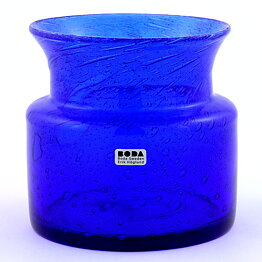
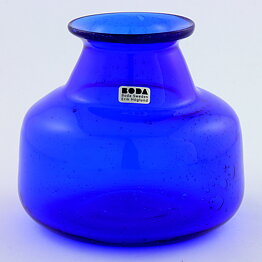
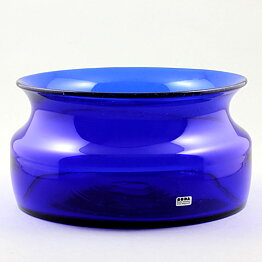
Free-blown glass is crafted by blowing without a mold. Usually, a single bubble is formed, but several can be achieved by using steel wire rings. The glass is often formed with wet newspapers and wooden boards.

Free-blown petrol blue vase by Arthur Percy, height 75 cm (20 in)

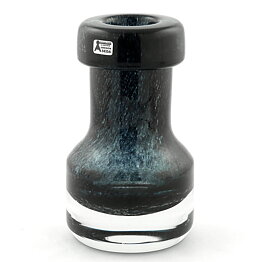
Free-blown oil-colored vase "Volcano" by Bertil Vallien, height 14 cm (5.5 in)
Mold-Blowing
Mold-blown glass is crafted by blowing in a mold of graphite, metal, or sand. If the mold has a pattern, it will show on the surface of the glass.

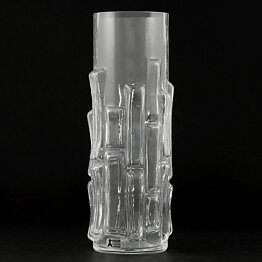
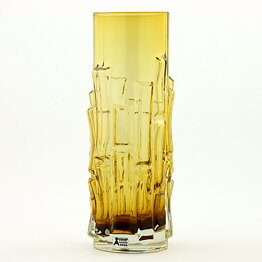
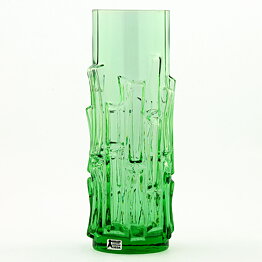
Mold-blown vase "Bamboo" by Oiva Toikka, height 27 cm (10.6 in)

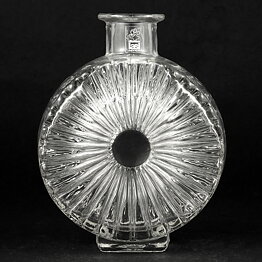
Mold-blown burgundy-colored "Sun Bottle" by Helena Tynell, height 12 cm (4.7 in)
Casting
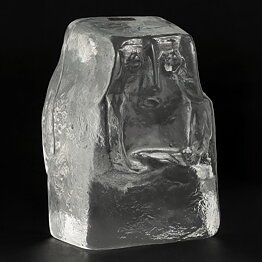
Glass casting is done by pouring molten glass in a mold of graphite, metal, or sand. If the mold has a pattern, it will show on the surface of the glass. Objects are often placed in the glass before it solidifies.

Casted cube by Oiva Toikka, height 8 cm (3.1 in)

Casted boat by Bertil Vallien, length 43 cm (16.9 in)
Grinding
Grinding glass is done to create flat surfaces or decorative patterns.

Grinded leaves on a bowl by Sigurd Persson, diameter 18 cm (7.1 in)

Grinded pattern on a vase by Aimo Okkolin, height 28 cm (11.0 in)
Blasting
When glass is blasted, an air jet of sand creates a matte surface. By covering parts of the glass before blasting, craftsmen can create decorative motifs.

Blasted red shoe "Catwalk" by Kjell Engman, height 11 cm (4.3 in)

Blasted blue-green bowl by Bertil Vallien, diameter 21 cm (8.3 in)
Etching
When etching glass, craftsmen first protect the surface with varnish. Then, they carve a pattern with a needle. Afterwards, they dip the object in acid and the exposed surfaces are corroded, leaving a decorative motif.

Etched pink and blue vase by Astrid Gate, height 21 cm (8.3 in)

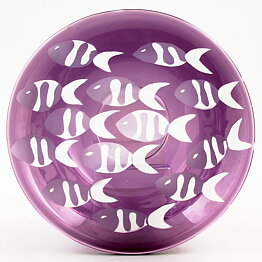
Etched purple vase by Karl Lindeberg, height 25 cm (9.8 in)
Engraving
When engraving glass, craftsmen carve the decor with an abrasive wheel or drill. A diamond bit is used to do the more detailed engraving.

Engraved blue bowl by Edward Hald, diameter 15 cm (5.9 in)

Engraved yellow vase by Vicke Lindstrand, height 20 cm (7.9 in)
Painting
Painting glass is done with colored and easily melted glass powder. It is accomplished with a brush and long strokes. The object is then fired at moderate temperature and the color melts.

Painted colorful glass by Anne Nilsson, height 27 cm (10.6 in)

Painted blue "Birdy" by Ulrica Hydman Vallien, height 11 cm (4.3 in)
Adding
Adding glass means that a craftsman puts a smaller part on a larger glass mass. The added part is often a contrasting color and shape.

Added eyes and eyebrows on the bird "Uhuu" by Oiva Toikka, height 26 cm (10.2 in)

Added eyes and lips on sculpture by Jan-Erik Ritzman, height 24 cm (9.4 in)
Rolling in Color
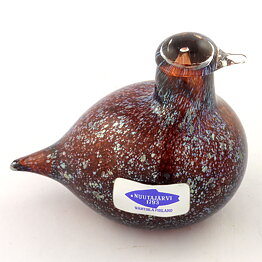
When rolling in color, the artist rolls molted glass into crushed, colored glass. Different grain sizes of crushed glass create varying effects.

Rolled blue color on an egg vase by Bertil Vallien, height 16 cm (6.3 in)

Rolled blue color spots on "Ruby bird" by Oiva Toikka, length 21 cm (8.3 in)
Underlay
Glass with underlay has a colored inner layer and a clear outer layer.

Blue vase with underlay by Vicke Lindstrand, 23 cm (9.1 in)

Multicolored vase with underlay by Göran Wärff, height 36 cm (14.2 in)
Ravenna
Ravenna is a special type of glass with underlay (a colored inner layer and a clear outer layer). Then, craftsmen make an indented pattern in the colored inner layer and fill the indents with shattered glass of a different color, before covering with a new layer of clear glass. The technique was developed by Sven Palmqvist at Orrefors in 1948 after a trip to the Italian city of Ravenna.

Green Ravenna bowl by Olle Alberius, diameter 26 cm (10.2 in)

Blue Ravenna bowl by Sven Palmqvist, diameter 25 cm (9.8 in)
Overlay
Glass with overlay has a clear inner layer and one or more colored outer layers. By grinding, etching, or engraving, a craftsman can decorate the glass with motifs.

White vase with overlay by Bertil Vallien, height 16 cm (6.3 in)

Green vase with overlay by Astrid Gate, diameter 16 cm (6.3 in)
Grail
Grail is a special type of glass with overlay (a clear inner layer and one or more colored outer layers). The artist then add another clear layer, so that the colored glass is trapped between the clear layers. Knut Bergqvist at Orrefors developed this technique in 1914. The name comes from the Holy Grail – the cup used to collect the blood of Christ at the crucifixion.

Blue and green Grail vase by Klas-Göran Tinbäck, height 20 cm (7.9 in)

Green Grail vase by Edward Hald, height 21 cm (8.3 in)
Ariel
Ariel is a special type of glass with overlay (a clear inner layer and one or more colored outer layers). A craftsman then makes an indented pattern in the colored glass before adding a layer of clear glass that traps air bubbles in the indentions. Edvin Öhrström, Gustaf Bergkvist, and Vicke Lindstrand created this technique at Orrefors during the 1930s. The name comes from the air spirit "Ariel" in Shakespeare's play ”The Tempest”.

Green Ariel vase with air bubbles by Olle Alberius, height 20 cm (7.9 in)

Blue Ariel vase with air bubbles by Edvin Öhrström, height 20 cm (7.9 in)
Kraka
Kraka is a special type of glass with overlay (a clear inner layer and one or more colored outer layers). A craftsman then pulls a net over the outer layer and sandblasts it before adding a clear outer layer. Sven Palmqvist developed this technique at Orrefors in 1944. The name comes from a female character in a Viking saga who wore only a fish net.

Blue and green Kraka-vase by Sven Palmqvist, height 20 cm (7.9 in)

Blue and green Kraka-vase by Vicke Lindstrand, height 22 cm (8.7 in)