

Wilhelm Kåge – Ceramics from Gustavsberg
Wilhelm Kåge (1889-1960) is one of the most well-known representatives of the illustrious Swedish ceramic design of the 20th century. He was the artistic leader for Gustavsberg in the 1930s and 1940s and is often called the father of Swedish modernism. Kage is represented at the Swedish National Museum of Art and Design. Learn more about Wilhelm Kåge below. Find your favorite among Wilhelm’s design or learn more about him by reading his biography.




Wilhelm Kåge – A Short Biography
The early years
Wilhelm Kage (1889-1960) was born and raised in the Swedish capital of Stockholm. He studied drawing at the University College of Arts, Crafts, and Design in Stockholm. He continued his studies in Munich, perfecting his skills as an illustrator. During the first world war, he gained notoriety in Sweden for his colorful posters for theaters, lotteries, and exhibitions.
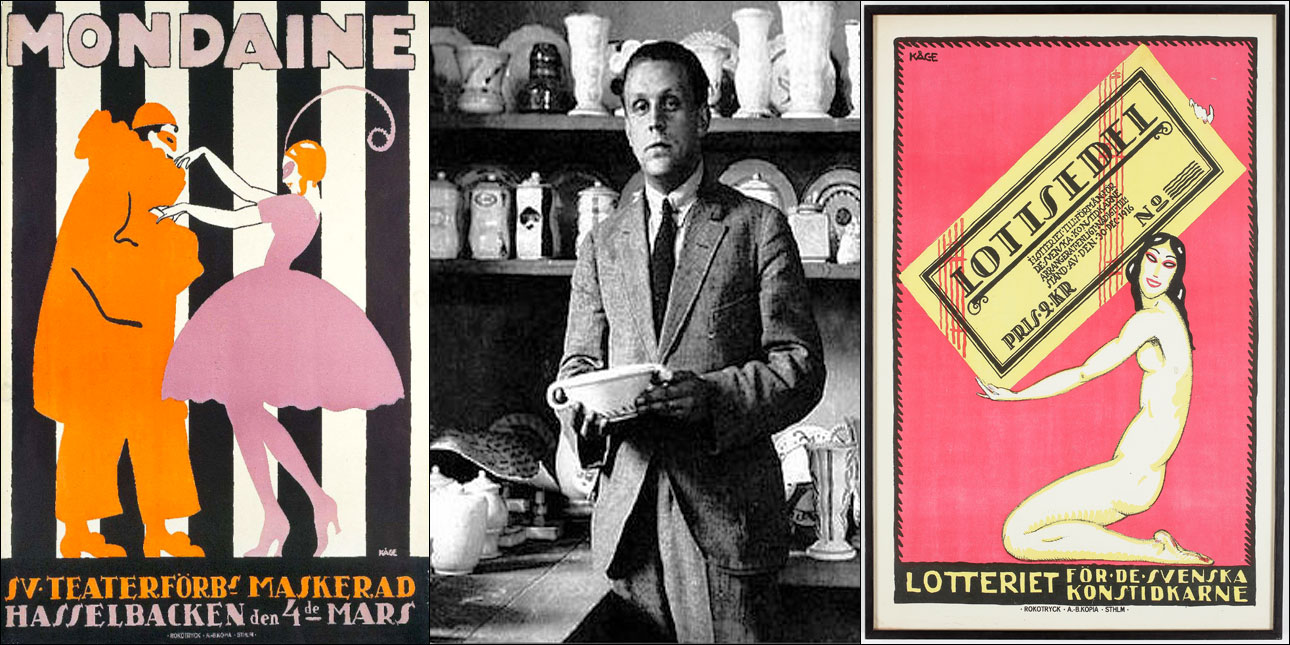
Left and right image, example of Wilhelmʼs posters during the 1910s. Center image, Wilhelm at the start of his Gustavsberg career.
Left image, Liljebla tableware line. Right image, Wilhelm inspecting a vase.
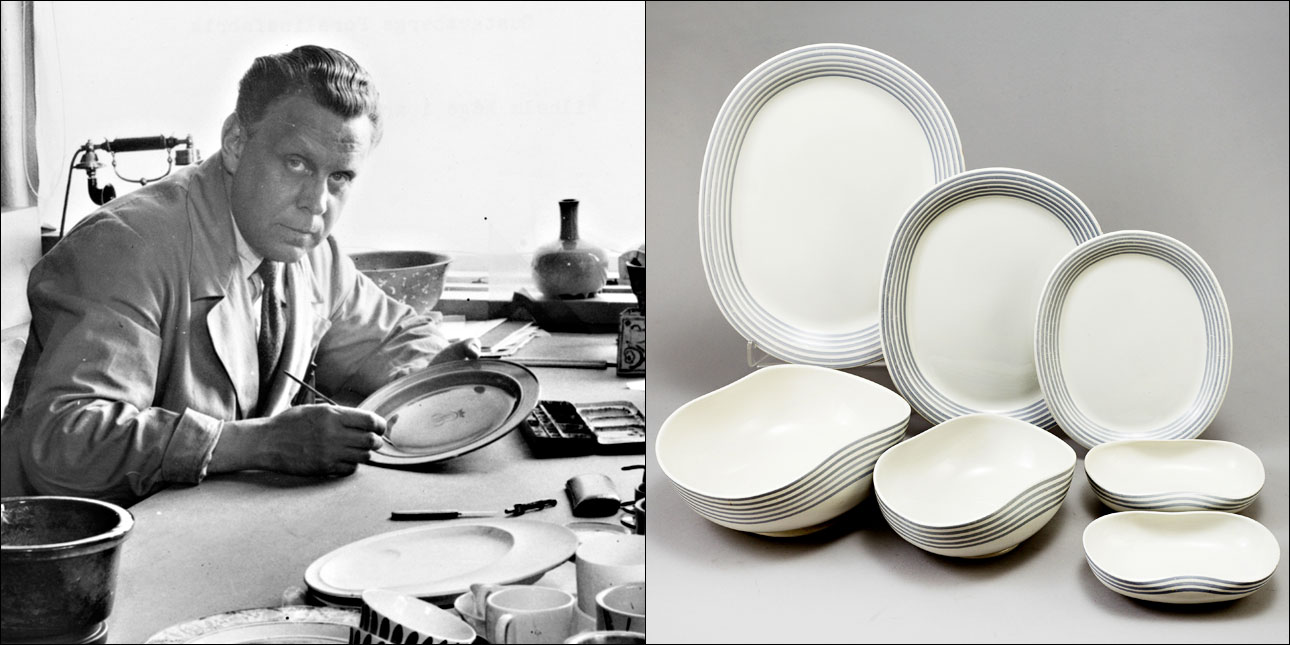
Left image, Wilhelm decorating a plate. Right image, Gray Stripes tableware set from 1945.
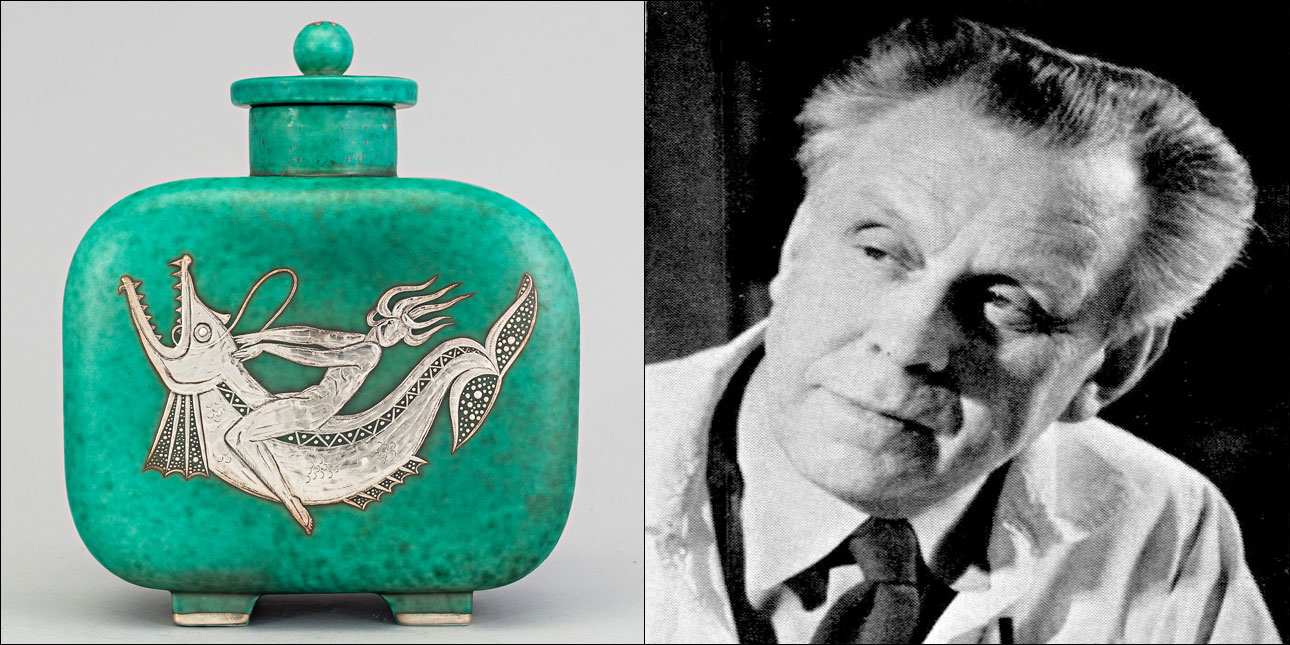
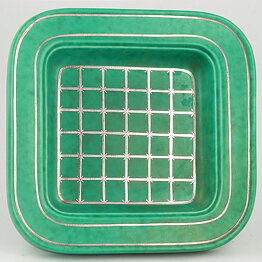
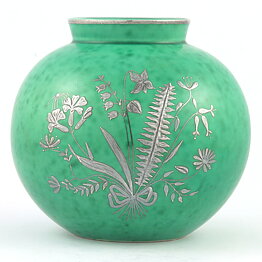
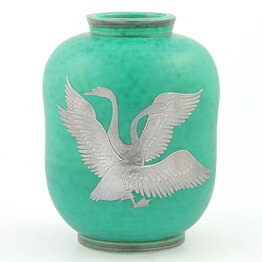
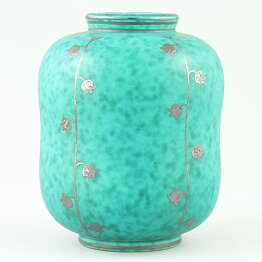
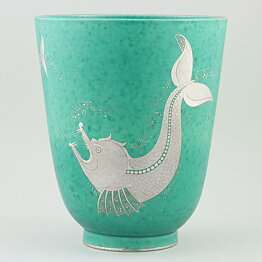
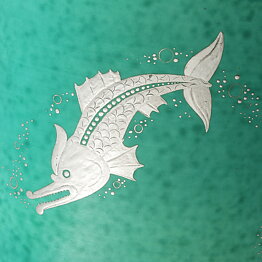
Left image, Argenta urn with typical silver decor. Right image, Wilhelm deep in thought.
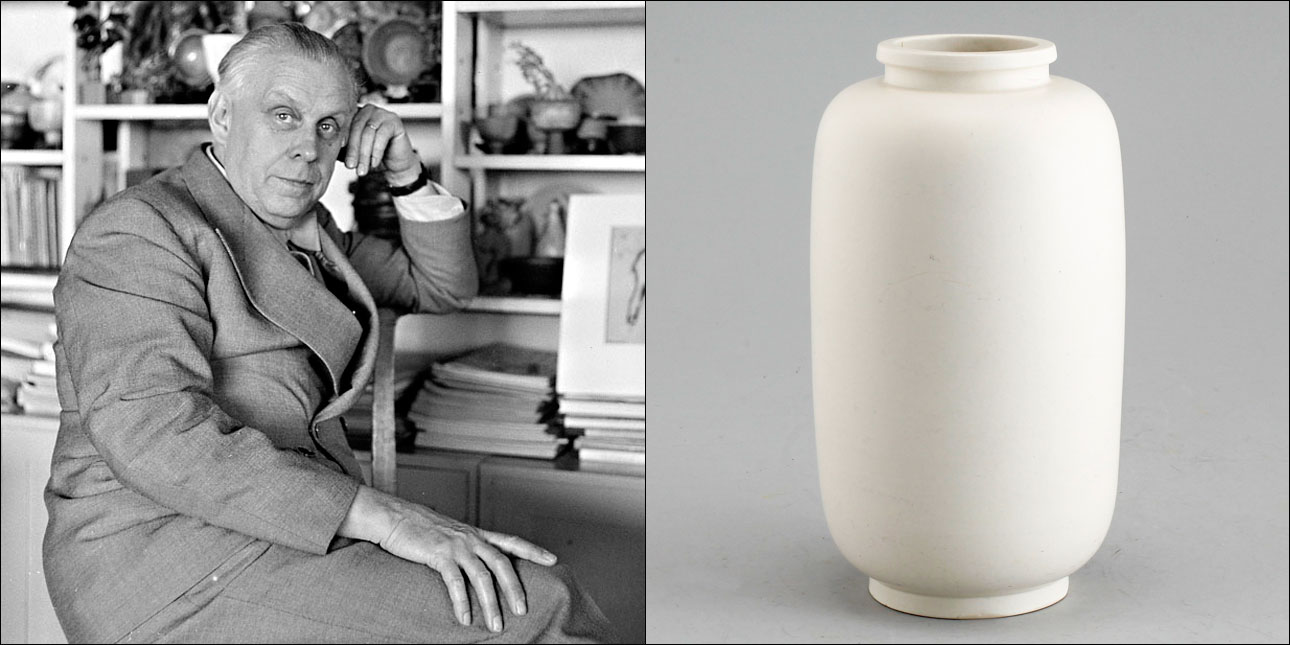
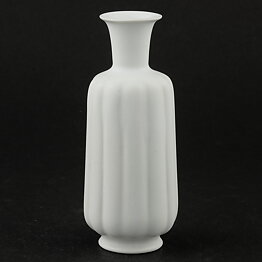
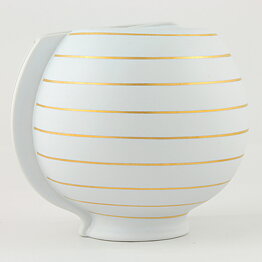
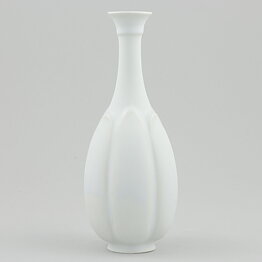
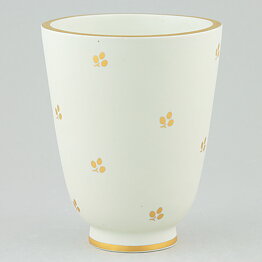
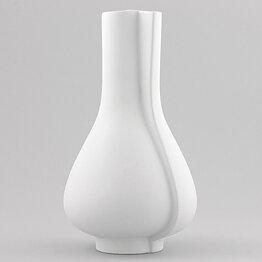
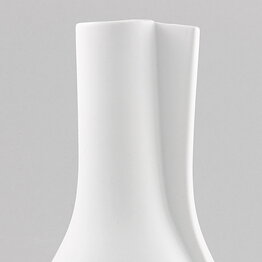
Left image, Wilhelm posing for a photograph at Gustavsberg. Right image, Cylindrical matte-white vase from the Carrara series in 1934.
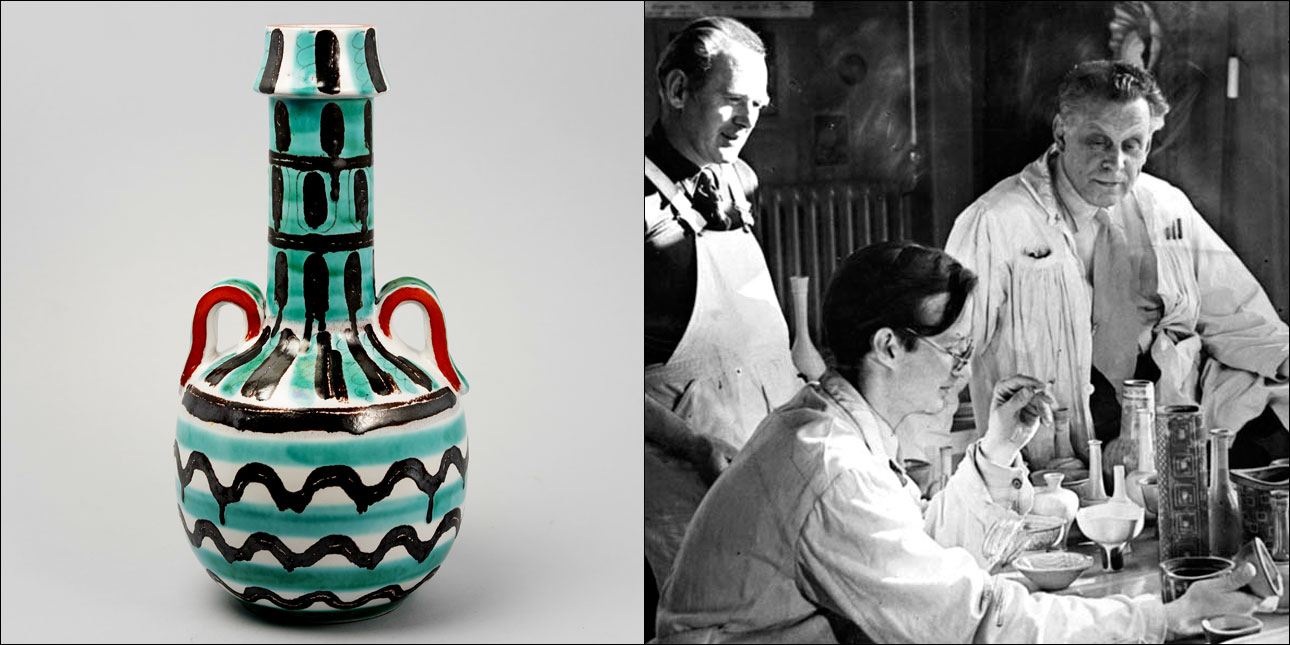
Left image, faience vase from the 1940s. Right image, Wilhelm in cooperation with the master thrower Berndt Friberg and the rising star, Stig Lindberg.
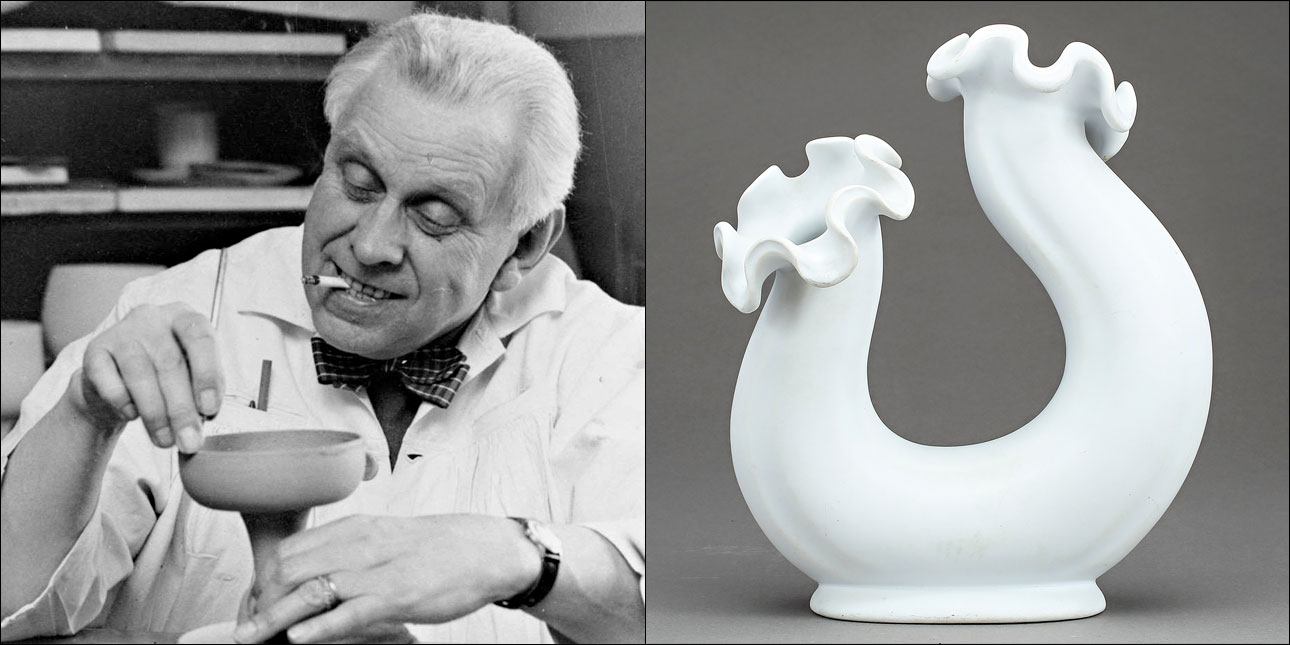
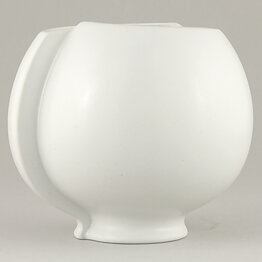
Left image, Wilhelm inspecting an unglazed Farsta vase. Right image, biomorphic white vase from the Vaga series in 1936.
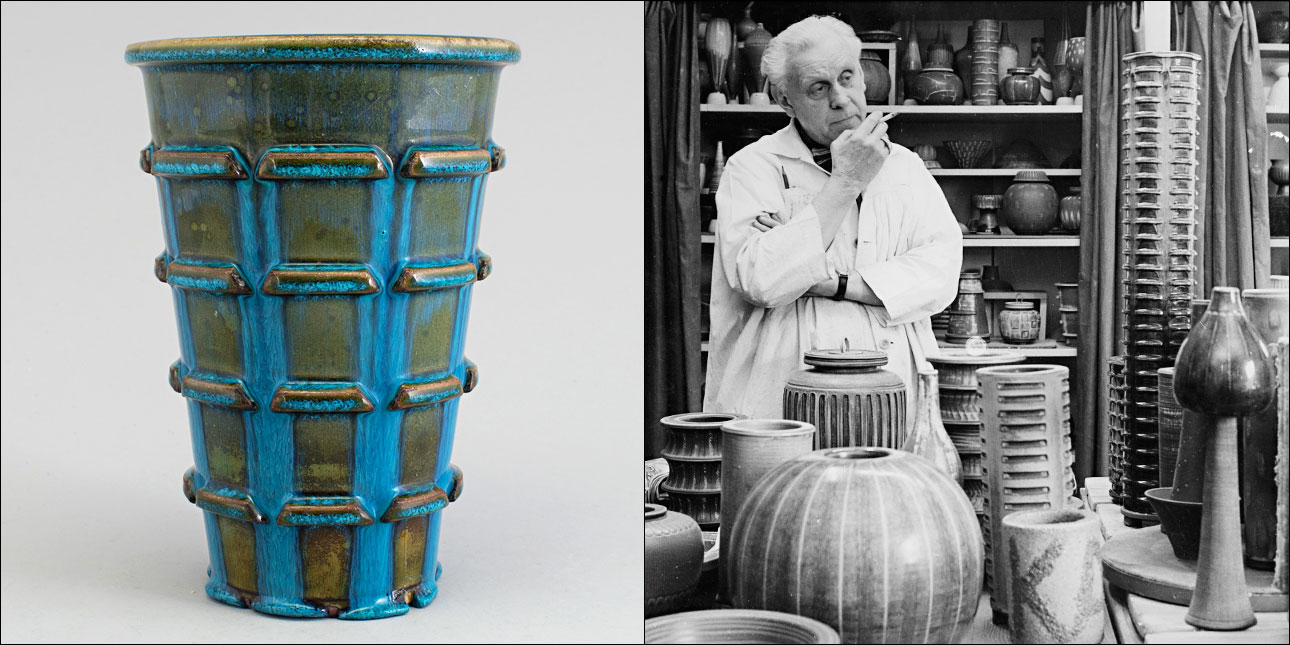
Left image, conical Farsta vase. Right image, Wilhelm in the Gustavsberg studio.
Left and right image, example of Wilhelmʼs posters during the 1910s. Center image, Wilhelm at the start of his Gustavsberg career.
Wilhelm’s poster art attracted the attention of the Gustavsberg porcelain factory. The factory was hoping to revive interest in its production and sought out artists with new ideas. Wilhelm accepted the offer, despite his lack of experience in clay, throwing, and glazing. His task was to add an artistic touch to the factory’s functional items. The factory’s gamble on Wilhelm would pay great dividends.
Left image, Liljebla tableware line. Right image, Wilhelm inspecting a vase.
Ceramic debut
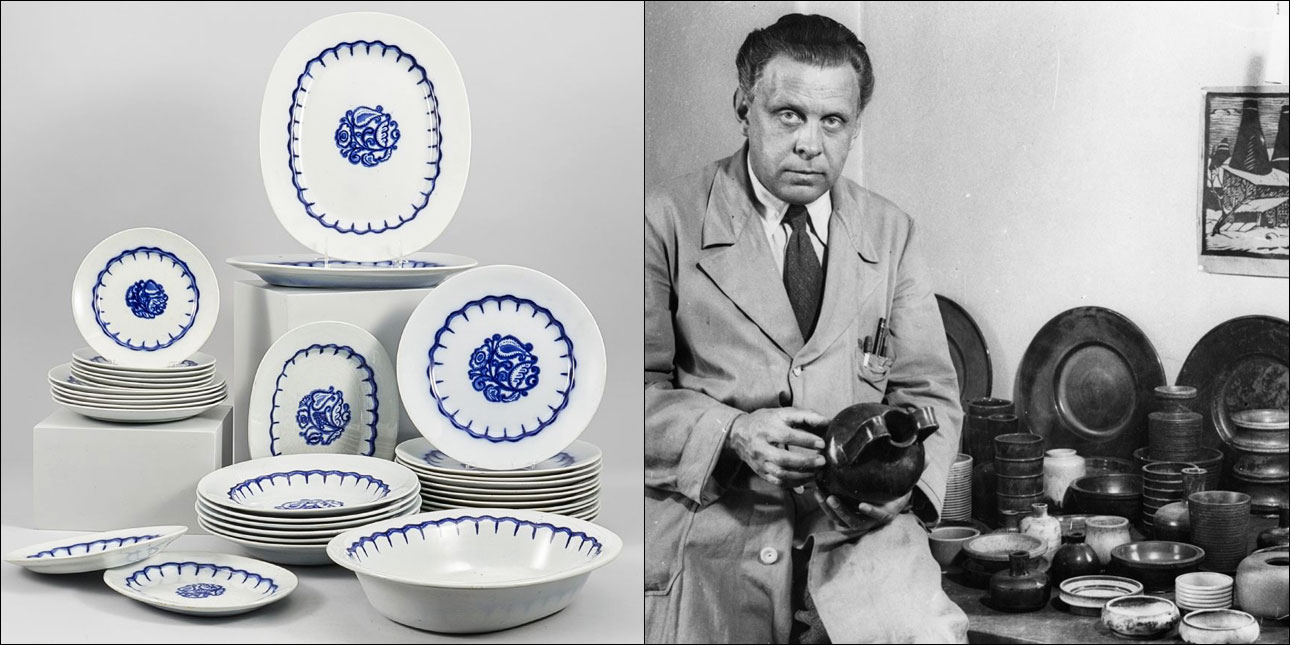
Within a year, Wilhelm Kage had created the functional service series, "Liljebla" (Lily Blue). The forms, with their flowing blue decor, were simple yet reminiscent of 18th-century Swedish ceramics. The tableware series was a success at the Liljevalchs Exhibition in 1917, which is noted as the birthplace of the modern Swedish art industry. It was the first time artists and industries came together to create beautiful yet practical home decor. After the exhibition, Wilhelm was appointed artistic leader for Gustavsberg.
Left image, Wilhelm decorating a plate. Right image, Gray Stripes tableware set from 1945.
The birth of Functionalism
During the 1920s and 1930s, Wilhelm Kage designed about thirty tableware sets. The series followed functionalistic ideas regarding rational production and multi-functional parts. Wilhelm's most popular dinnerware series was “Gra rander" (Gray Stripes) from 1945. It was lauded as "soft-form dinnerware” and was a commercial success for over two decades.
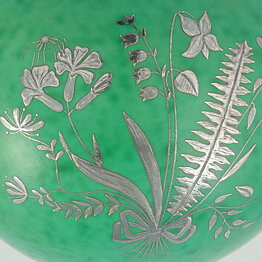
Left image, Argenta urn with typical silver decor. Right image, Wilhelm deep in thought.
Evergreen Argenta
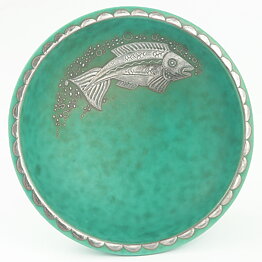
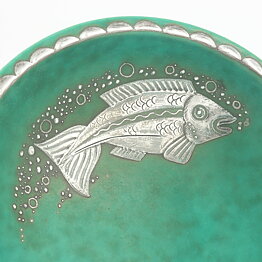
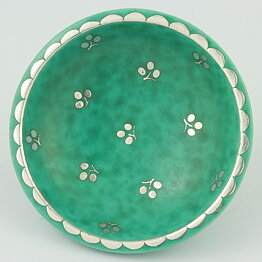
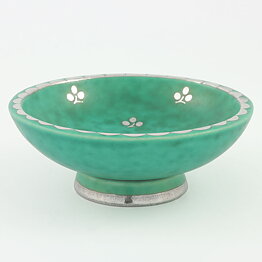
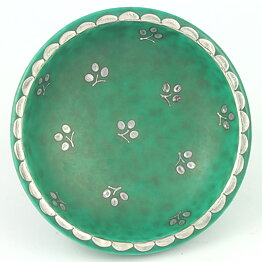
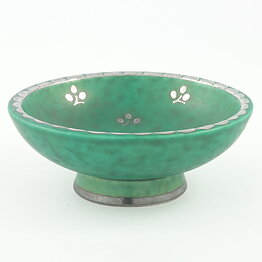
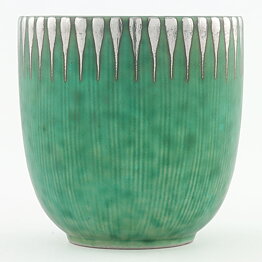
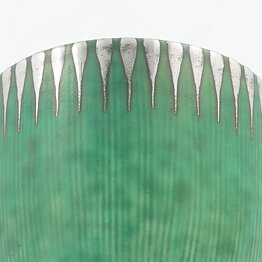
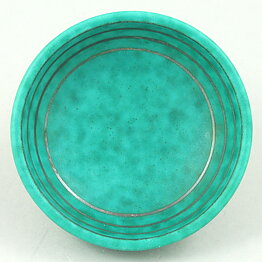
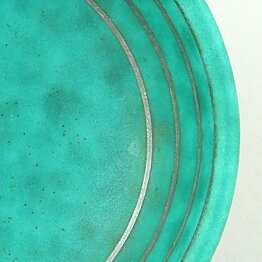
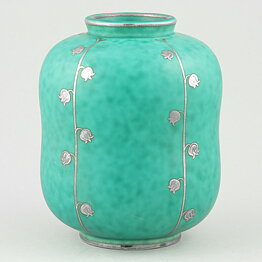
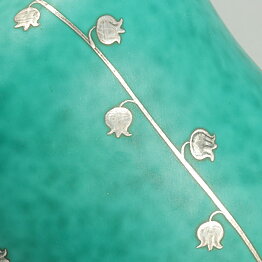
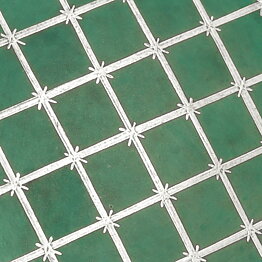
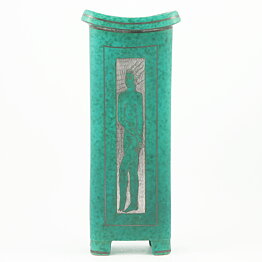
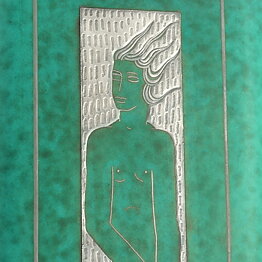
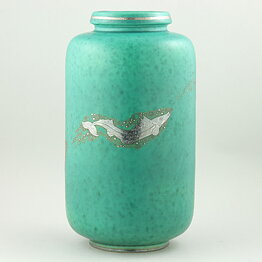
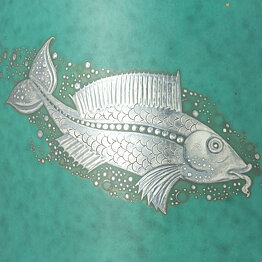
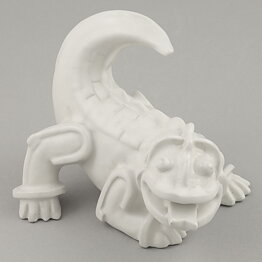
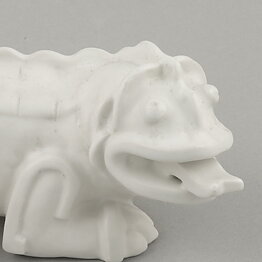
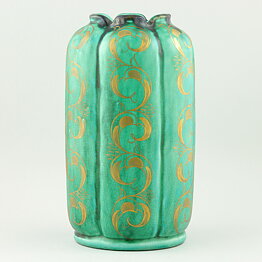
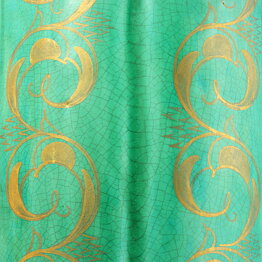
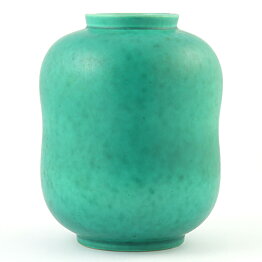
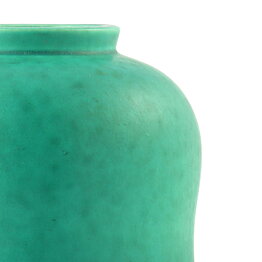
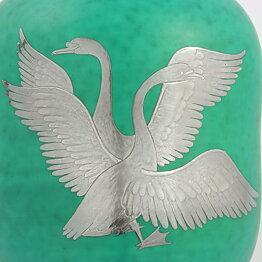
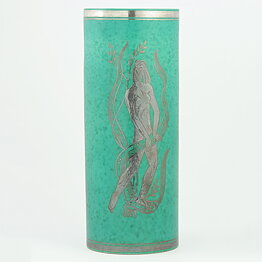
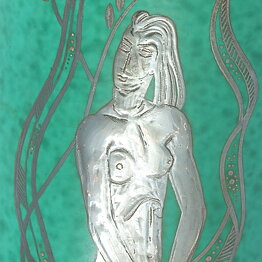
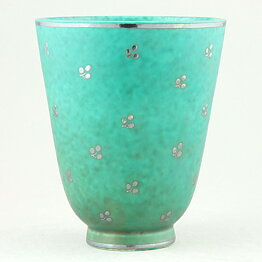
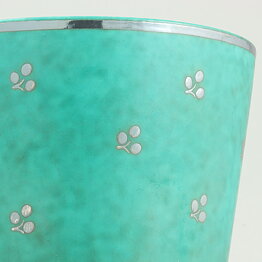
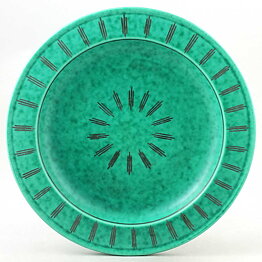
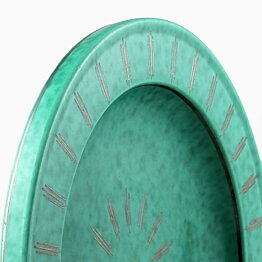
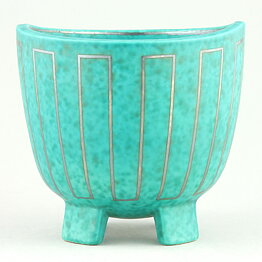
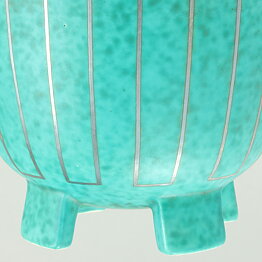
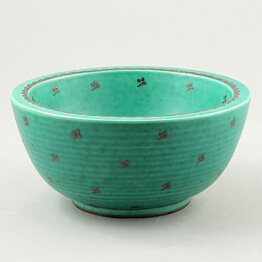
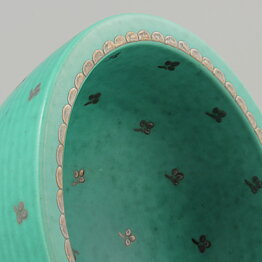
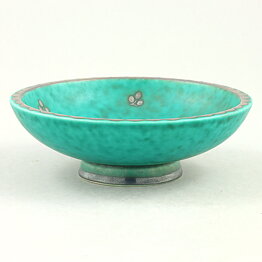
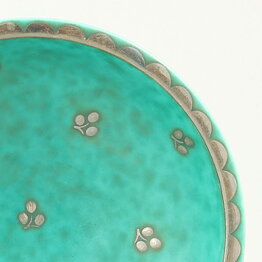
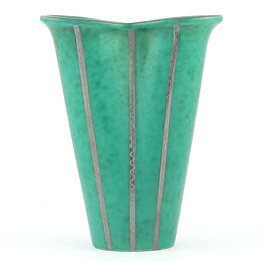
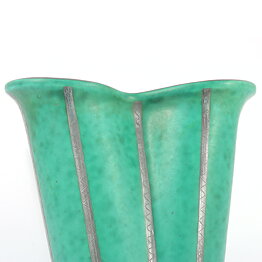
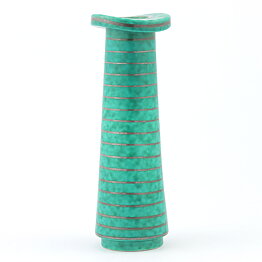
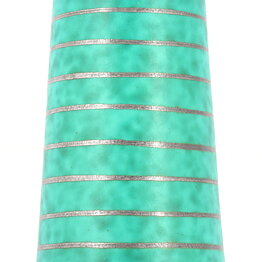
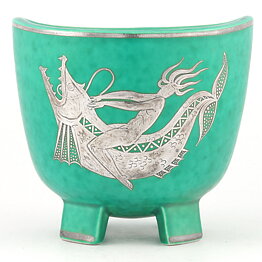
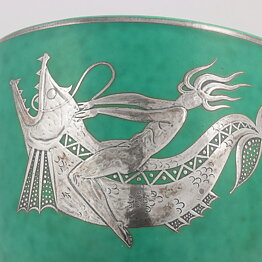
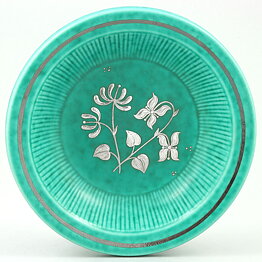
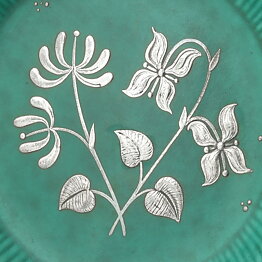
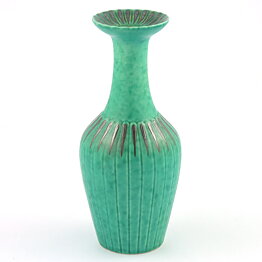
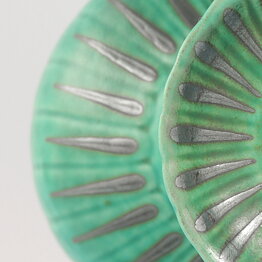
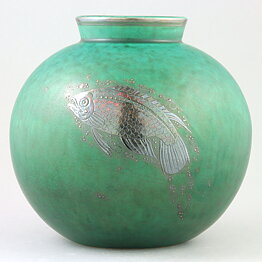
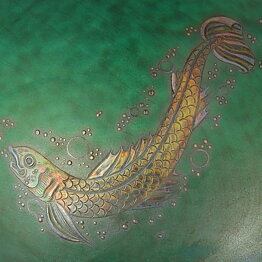
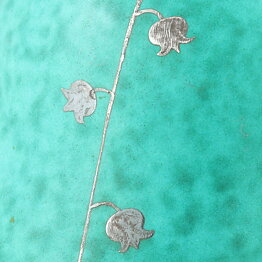
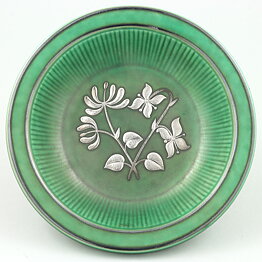
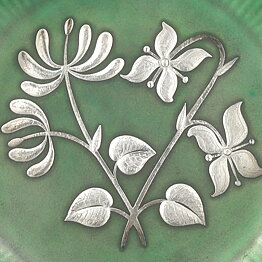
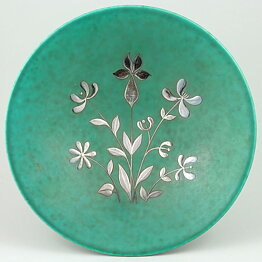
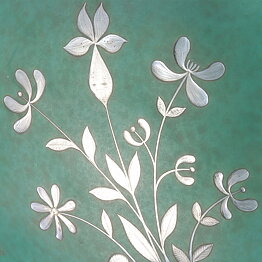
In the 1920s, Wilhelm created the Argenta series which was popularized at the Stockholm Exhibition of 1930. The series consisted of crocks, bowls, and vases adorned with a characteristic green glaze. The objects have silver decor with dragons, flowers, and dancing women. Argenta was first manufactured in flint but later manufactured in stoneware.
Distinctive Farsta pieces
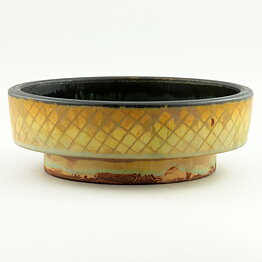
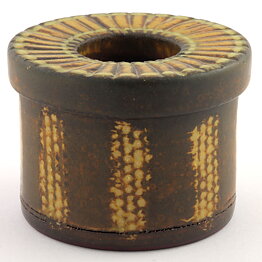
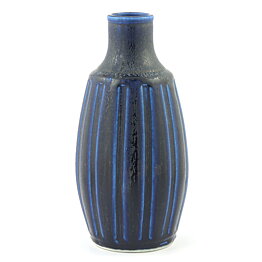
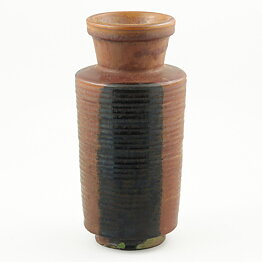
Wilhelm Kage’s Farsta set comprises his most his most exclusive pottery artwork. It was first presented at the groundbreaking Stockholm Exhibition of 1930, where Swedish artists, craftsmen and companies showed their latest products. The handmade Farsta pieces – totally unique in both their shape and glaze – were then crafted until the 1950s in the Gustavsberg studio.

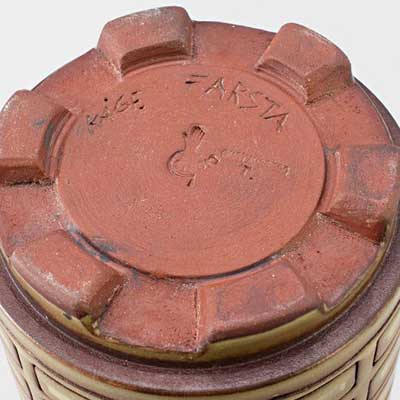
The stoneware clay for the artwork was collected from the Farsta bay close to the Gustavsberg factory. The objects were therefor incised with “Farsta”. The width of the pieces is striking – ranging from miniature to large-scale. There are vases and urns, sculptures, ashtrays, and half-meter high pieces. The Wilhelm Kage Farsta objects all share a discernible presence and aura of quality.
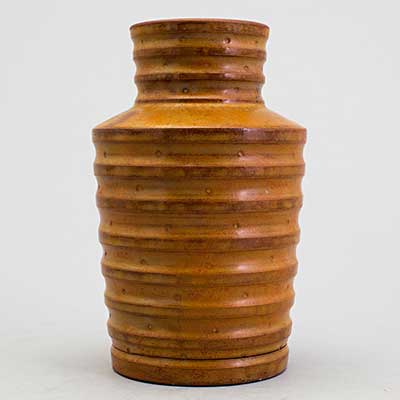
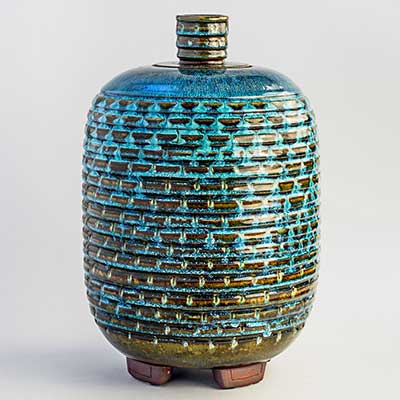
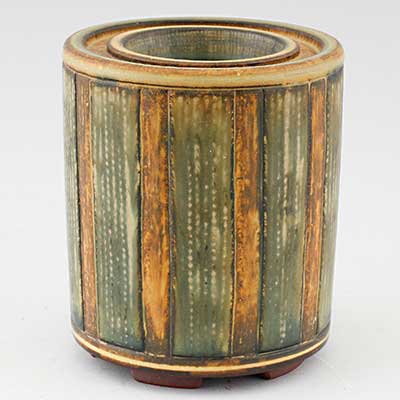
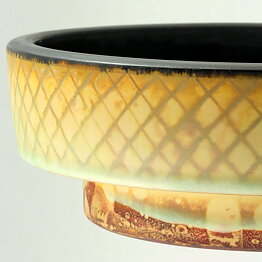
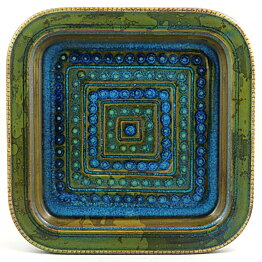
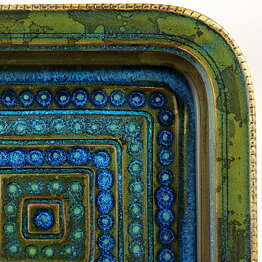
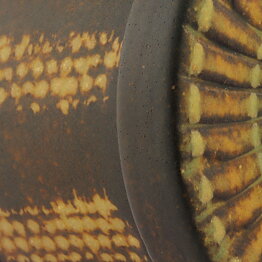
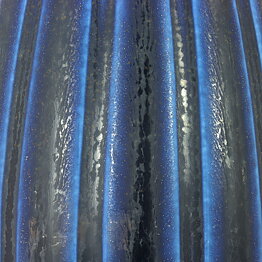
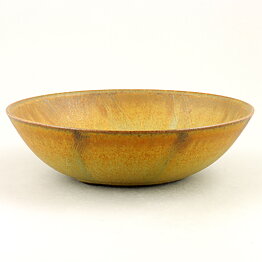
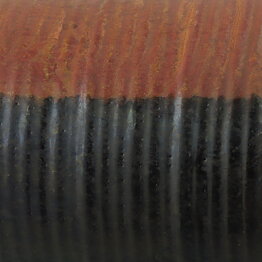
The fired Farsta pieces were dipped in a bath with metal oxides which were drawn into the clay. The pieces were thenglazed and fired again. The oxides were drawn out by the heat to lend the glaze a layered texture with magnificent color effects.
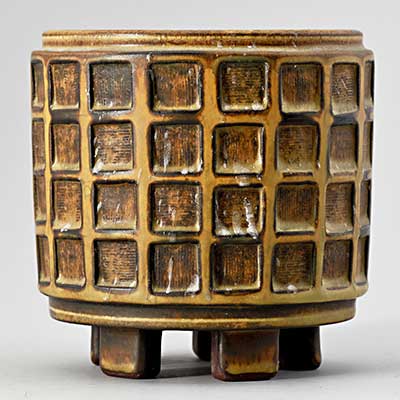
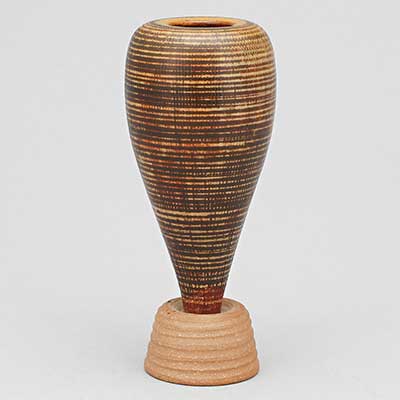
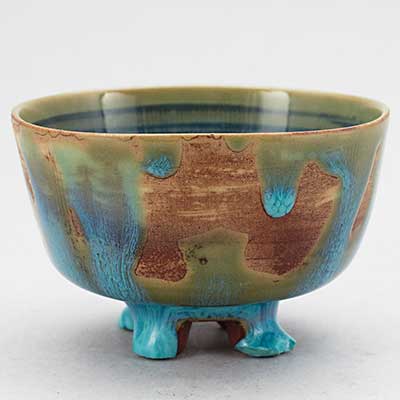
The Wilhelm Kage Farsta pieces fell into oblivion during the 1960s and 1970s. But since the the 1980s, the pieces are again regarded as nobility in the world of Swedish pottery. They could be quite expensive, so better start saving!

Wilhelm Kage glazing a Farsta vase
Farsta mark underneath a vase
The stoneware clay for the artwork was collected from the Farsta bay close to the Gustavsberg factory. The objects were therefor incised with “Farsta”. The width of the pieces is striking – ranging from miniature to large-scale. There are vases and urns, sculptures, ashtrays, and half-meter high pieces. The Wilhelm Kage Farsta objects all share a discernible presence and aura of quality.
Vase, height 15 cm (5.9 inches), from 1931
Vase, height 32 cm (12.6 inches)
Vase, height 13 cm (5.9 inches)
The fired Farsta pieces were dipped in a bath with metal oxides which were drawn into the clay. The pieces were thenglazed and fired again. The oxides were drawn out by the heat to lend the glaze a layered texture with magnificent color effects.
Vase, height 12 cm (4.7 inches)
Vase, height 16 cm (6.3 inches)
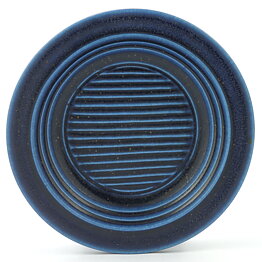
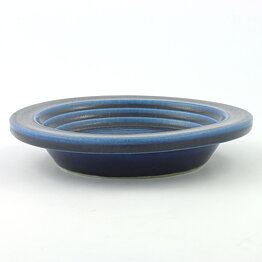
Bowl, diameter 9 cm (3.5 inches)
The Wilhelm Kage Farsta pieces fell into oblivion during the 1960s and 1970s. But since the the 1980s, the pieces are again regarded as nobility in the world of Swedish pottery. They could be quite expensive, so better start saving!
Left image, Wilhelm posing for a photograph at Gustavsberg. Right image, Cylindrical matte-white vase from the Carrara series in 1934.
Cooperation with Stig Lindberg
During the late 1930s, Wilhelm was impressed with a young adept, Stig Lindberg. The young prodigy had quickly distinguished himself at Gustavsberg by displaying magnificent drawing technique and a wealth of fresh ideas. Wilhelm opened the door to a more prominent role in the factory, while offering Stig greater artistic freedom.
Left image, faience vase from the 1940s. Right image, Wilhelm in cooperation with the master thrower Berndt Friberg and the rising star, Stig Lindberg.
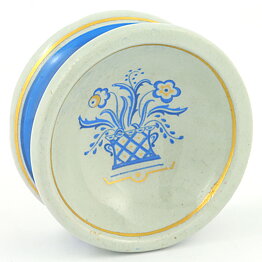
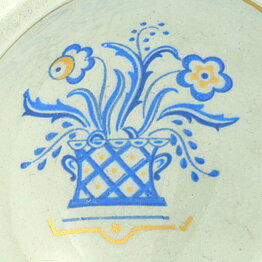
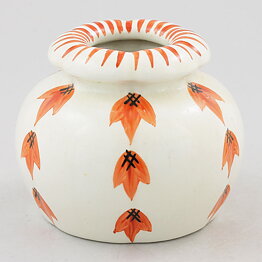
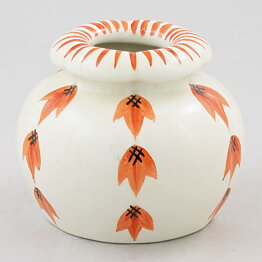
Wilhelm and Stig collaborated to develop diverse, extensive faience production through the late 1930s and early 1940s. The vases, dishes, and bowls were formed from reddish earthenware, coated with a milky-white glaze and handpainted with bold colors and elaborate decor. The floral motifs of the 1940s slowly gave way to era-typical geometrical decor in the 1950s and 1960s. The faience series was a huge success and is still one of the most well-known symbols of Swedish mid-century design.
Left image, Wilhelm inspecting an unglazed Farsta vase. Right image, biomorphic white vase from the Vaga series in 1936.
The birth of the Gustavsberg studio
Wilhelm Kage initiated the Gustavsberg studio at Gustavberg in 1942, which would become the creative hub of the ceramic factory. The high-quality sets were marked with the Gustavsberg studio hand in different colors. Wilhelm mainly added the studio hand in brown.
Left image, conical Farsta vase. Right image, Wilhelm in the Gustavsberg studio.
The final years
In 1949, Wilhelm relinquished his role as artistic director to his colleague, Stig Lindberg. He continued his studio work at Gustavberg until his death in 1960. He is remembered as Gustavberg’s ceramic king, who for more than 40 years, guided the factory through the shifting tide of 20th century style trends and into modern times.
Video
Wilhelm Kage glazing Farsta artware
This video shows Wilhelm Kage presenting glazing techniques, Farsta goods and sinter artworks. The short sequence shows work in the Gustavsberg studio.
Wilhelm Kage and Stig Lindberg at Gustavsberg
This video shows Stig Lindberg and Wilhelm Kage decorating faience artworks. Probably early 1940s.