

Upsala-Ekeby – Pottery of Sweden


A Short History of Upsala-Ekeby
– Sweden’s Acclaimed Ceramic Factory
The Start of Upsala-Ekeby
Upsala-Ekeby was founded outside of the Swedish city of Uppsala in 1885 by the von Bahr family. The location was chosen because the area had clay that was particularly suitable for tile making. At first, the company made only bricks. However, it soon expanded production to include wall tiles, masonry heaters, tableware, and decorative ceramics. The first years were financially difficult, but then market conditions improved. By the end of the 1910s, the factory was the largest of its kind in Scandinavia with 300 employees. In the beginning, the production of utilitarian and decorative wares was modest, and the products were often copies of foreign models.
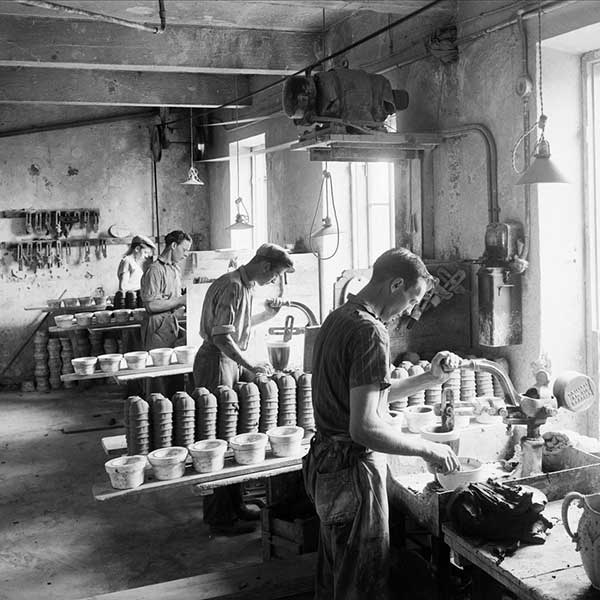
Upsala-Ekeby workshop in the early 20th century

Masonry heater from the early 20th century in a modern Swedish home
Recruiting Designers
.jpg)
The 1930s and Anna-Lisa Thomson
In the 1930s, Anna-Lisa Thomson (1905-1952) was the leading designer at the factory. Her work was innovative; testing new materials and decorative techniques, she developed a signature style with simple and clean shapes. Inspiration often came from nature or bodies of water.
Anna-Lisa Thomson displaying pottery in the Upsala-Ekeby show room in the late 1930s

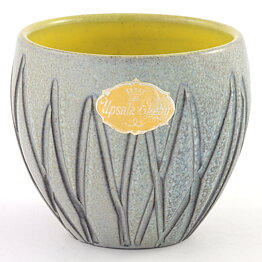
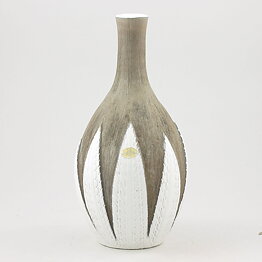
Early 1940s vase with water theme in relief
Ingrid Atterberg and Exotism
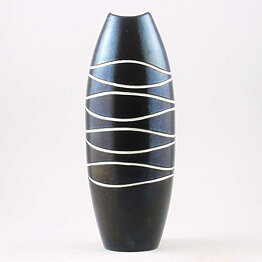
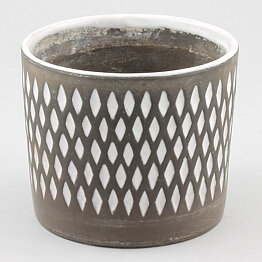
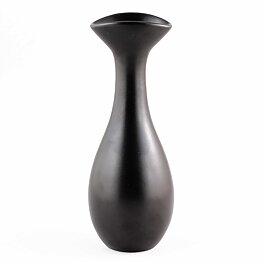
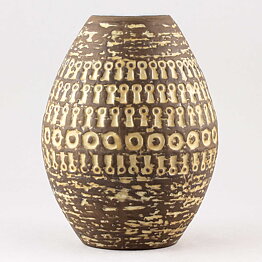
The 1950s fascination with exotic cultures found its way into Upsala-Ekeby’s production. This fascination influenced the shape, decor, and naming of some of the series. Ingrid Atterberg (1920-2008) and her ”Negro" series from 1953 is a good representative of this influence. The series with its manganese clay and striking carved white décor is now very sought after among pottery collectors..jpg)
Vase from the Negro series in 1953
.jpg)
Ingrid Atterberg in the 1950s.
Queen of Mod Cats - Dorothy Clough
.jpg)
Dorothy Clough in the 1950s
.jpg)
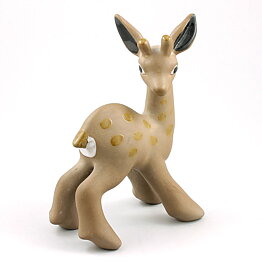
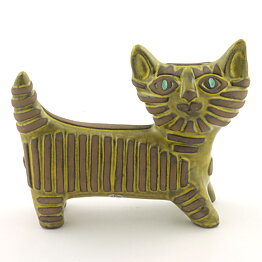
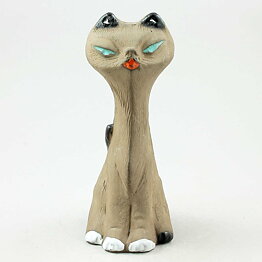
Modernistic 1950s Cat Figurines
Hjördis Oldfors and Geometric Décors
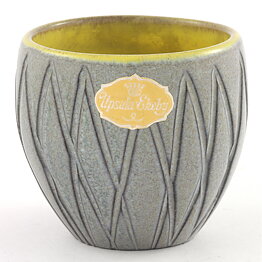
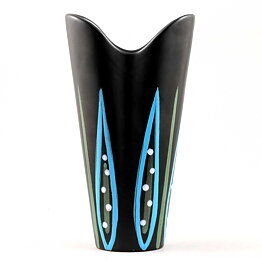
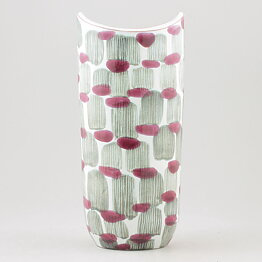
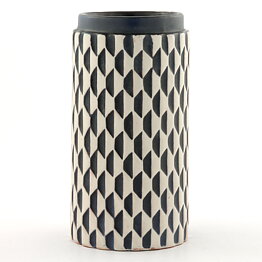
The art pottery series at Uppsala-Ekeby often had geometric décors. This was most obvious in the design of Hjördis Oldfors (1920-2014). Most of her series expressed her fondness for graphic patterns and décor, often in combination with softly-shaped pottery. The patterns and décor not only had an aesthetic purpose, but also filled a practical function. They effectively concealed joints in the vases created during the molding process..jpg)
Vase with geometric pattern from the Edfu series in 1960
.jpg)
Hjördis Oldfors in the 1950s
It is a Woman’s World - Mari Simmulson
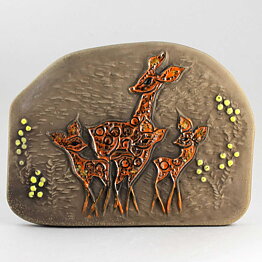
The female designers set the tone for Upsala-Ekeby in the mid-century decades. Women were also ubiquitous in the artwork of Mari Simmulson (1911-2000). They were often represented with almond-shaped eyes behind heavy eyelids. Her women typically have deep, thoughtful expressions, contrasting with the playful colors. In Simmulson’s world there was always both lightness and darkness, laughter and solemnity, all at the same time..jpg)
Mari Simmulson with a unique sculpture in the 1950s
.jpg)
1950s dish with woman motif