

Hertha Bengtson – Ceramics from Rörstrand
Hertha Bengtson (1917-1993) is one of the well-known representatives of the illustrious Swedish ceramic design of the 20th century. She was one of the leading designers for the Rörstrand factory in the 1950s. Bengtson is represented at the Swedish National Museum of Art and Design. Find your favorite among Hertha’s design or learn more about her by reading her biography.


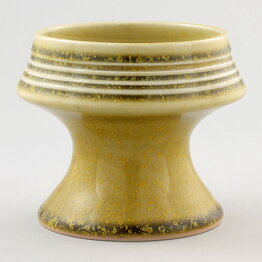

![Hertha Bengtsson (Florita 1960s) Coffee Cup with Lemon Yellow Glaze 10 cm [Sample Images]](https://cdn.abicart.com/shop/images/225047972-origpic-3fe91d/4412/art12/h7972/IMG_6845.jpg?max-width=262&max-height=262&quality=85)
![Hertha Bengtsson (Florita 1960s) Coffee Cup with Lemon Yellow Glaze 10 cm [Sample Images]](https://cdn.abicart.com/shop/images/225047972-origpic-76ef78/4412/art12/h7972/IMG_6845-kopia.jpg?max-width=262&max-height=262&quality=85)
![Hertha Bengtsson (Randa Banda 1965) Teacup Saucer 16 cm with Orange/Black Decor [Sample Images] [Free Shipping]](https://cdn.abicart.com/shop/images/225045570-origpic-3b959b/4412/art12/h5570/IMG_6821.jpg?max-width=262&max-height=262&quality=85)
![Hertha Bengtsson (Randa Banda 1965) Teacup Saucer 16 cm with Orange/Black Decor [Sample Images] [Free Shipping]](https://cdn.abicart.com/shop/images/225045570-origpic-a970c6/4412/art12/h5570/IMG_6821-kopia.jpg?max-width=262&max-height=262&quality=85)
![Hertha Bengtsson (Koka 1953) Teacup with Blue Linear Decor 12 cm (No Saucer) [Sample Images] (II)](https://cdn.abicart.com/shop/images/224919864-origpic-e9e820/4412/art12/h9864/IMG_6334-1.jpg?max-width=262&max-height=262&quality=85)
![Hertha Bengtsson (Koka 1953) Teacup with Blue Linear Decor 12 cm (No Saucer) [Sample Images] (II)](https://cdn.abicart.com/shop/4412/art12/h9864/224919864-origpic-e3523a.jpg?max-width=262&max-height=262&quality=85)
![Hertha Bengtsson (Koka 1953) Teacup with Blue Linear Decor 12 cm (No Saucer) [Sample Images]](https://cdn.abicart.com/shop/images/224919860-origpic-a8d79a/4412/art12/h9860/IMG_6334.jpg?max-width=262&max-height=262&quality=85)
![Hertha Bengtsson (Koka 1953) Teacup with Blue Linear Decor 12 cm (No Saucer) [Sample Images]](https://cdn.abicart.com/shop/images/224919860-origpic-9c9f03/4412/art12/h9860/IMG_6334-kopia.jpg?max-width=262&max-height=262&quality=85)
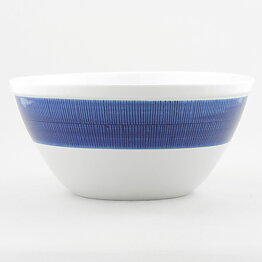
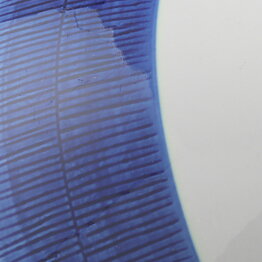
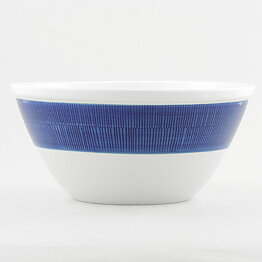
![Hertha Bengtsson (Koka 1953) Teacup with Blue Linear Decor 12 cm [Sample Images]](https://cdn.abicart.com/shop/images/224534381-origpic-8fc678/4412/art12/h4381/IMG_4094.jpg?max-width=262&max-height=262&quality=85)
![Hertha Bengtsson (Koka 1953) Teacup with Blue Linear Decor 12 cm [Sample Images]](https://cdn.abicart.com/shop/images/224534381-origpic-4e1d88/4412/art12/h4381/IMG_4099.jpg?max-width=262&max-height=262&quality=85)


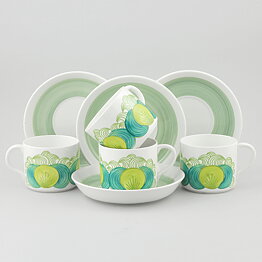
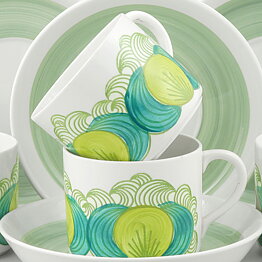


![Hertha Bengtsson (Randa Banda 1965) Teacup 12 cm with Plate 19 cm [Sample Images]](https://cdn.abicart.com/shop/images/222451047-origpic-f4f0b6/4412/art12/h1047/IMG_8061.jpg?max-width=262&max-height=262&quality=85)
![Hertha Bengtsson (Randa Banda 1965) Teacup 12 cm with Plate 19 cm [Sample Images]](https://cdn.abicart.com/shop/images/222451047-origpic-0dfe2a/4412/art12/h1047/IMG_8065.jpg?max-width=262&max-height=262&quality=85)
![Hertha Bengtsson (Koka 1953) Coffee Cup with Blue Linear Decor 10 cm [Sample Images]](https://cdn.abicart.com/shop/4412/art12/h1023/222441023-origpic-bb4fac.jpg?max-width=262&max-height=262&quality=85)
![Hertha Bengtsson (Koka 1953) Coffee Cup with Blue Linear Decor 10 cm [Sample Images]](https://cdn.abicart.com/shop/4412/art12/h1023/222441023-origpic-4b501d.jpg?max-width=262&max-height=262&quality=85)
Hertha Bengtson – A Short Biography
The early years
Hertha Bengtson (1917-93) was born in the southern Sweden province of Blekinge. Early in life, Hertha developed an interest in drawing, though her family lacked the financial means to support full-time studies. When she reached 18, Hertha finally pursued her interest in art at an evening school for porcelain painting. Only two years later, in 1939, she became employed as a pattern designer at Hackefors porcelain factory in Linkoping. Despite having only two years of evening courses in porcelain painting to back her up, Hertha had unwavering faith in her ability.

Left image, oil painting with woman motif. Right image, a young Hertha.
After three weeks of trial work, Hertha was offered permanent employment, starting with pattern design and decor. Soon, she had a hand in most of the factory’s production. Beyond her design interests, she took on responsibilities including the management of production costs and payroll. In 1939, World War II broke out; the factory’s supervisor was called to duty. At 22 years-old, Hertha was appointed the head of her department.
Starting at Rorstrand
Two years later, Rorstrand’s Porcelain Factory in Lidkoping was in need of new talent. Hertha quickly seized the opportunity. Though she was hired to work with decor, Hertha’s curiosity steered her towards work in design. At that time, there were many accomplished artists established at the company, including Gunnar Nylund and Carl-Harry Stålhane. The level of camaraderie was equal to that of the competition for resources. Hertha had a strong interest in porcelain service, which was not considered particularly inspiring by her fellow designers.

Left image, prominent Rorstrand artists from left to right: Carl-Harry Stalhane, Marianne Westman, Birger Kaipiainen and Hertha Bengtson. Right image, Blue Fire teapot in the rare red color setting.
Blue fire and other tableware series
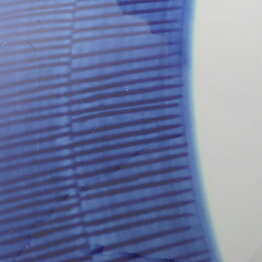
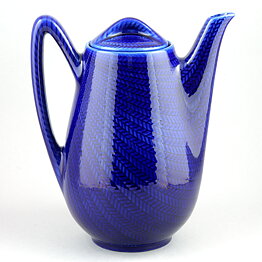
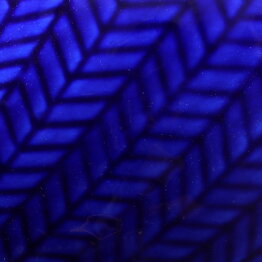
In the mid-1940s, Hertha set out to design the porcelain service of her dreams. The realization of this vision required four toilsome years engaged in the hard work of procuring quality materials, designing, firing, and glazing, all with Hertha’s characteristic persistence. When "Bla eld" (Blue Fire) was released in 1950, Hertha proved in no uncertain terms that even everyday service items can be an expression of artistic integrity. Blue fire was a sales success both in Sweden and abroad.
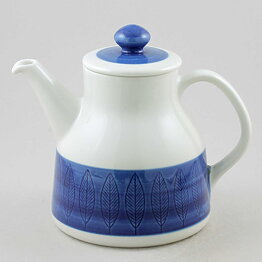
Bolstered by the success of Blue fire, Hertha was given near full freedom at the Rorstrand to bring her artistic vision to life. Over the course of twenty-three years at Rörstrand, Hertha designed a total of six service sets, including the popular "Koka" (Cook), the refined tea service, "Ceylon", and the classically beautiful "Rosmarin" (Rosemary). Hertha also undertook small-production, experimental art works. At the same time, Hertha became something of an informal spokesperson for the factory. She was unwaveringly knowledgeable, dedicated, and eloquent.

Left image, the Koka Bla tableware series. Right image, Hertha in the 1950s.
Being an energetic and ambitious professional in the 1940s and 1950s came at a cost to a woman. The possibility for work-life balance was limited, and it was no simple task to combine a career as a designer with normal family life. Hertha Bengston lived alone throughout her adult life, but maintained rich interactions with friends and colleagues.
After the Rorstrand years
In 1964, Hertha’s surprise decision to leave Rorstrand was met with protest and disbelief. But Hertha wished to broaden her horizons by working with stoneware. She reached out to Hoganas ceramics and was received with open arms. That year, Hertha presented "Jasmine", her first tableware set for the company, handmade from clay. Hertha's time at Hoganas resulted in one additional dinner set, and a series of unique individual stoneware. In the Spring of 1969, Hertha’s collaboration with Hoganas ended after a conflict with the management.

Left image, Hertha incising a pattern in the 1960s. Right image, rustic bowl with incised decoration.
At 52 years old, Hertha found herself unemployed and without collaborative support for the first time in her professional life. Later the same year, Hertha contacted the German porcelain giant Rosenthal, which had already taken notice of the ambitious Swede's eye for design and profitability. From 1969-1981, Hertha worked as a freelance artist and designer for Rosenthal. In total, she produced six service sets for the company.
In the 1970s, Hertha developed an interest in glassware. She embarked on a collaboration with Strömbergshyttans Glassworks and began to design artistic glass pieces. With her unwavering energy and work ethic, Hertha worked until her death in 1993, leaving behind a legacy of dynamic design.
In the 1970s, Hertha developed an interest in glassware. She embarked on a collaboration with Strömbergshyttans Glassworks and began to design artistic glass pieces. With her unwavering energy and work ethic, Hertha worked until her death in 1993, leaving behind a legacy of dynamic design.