When Sweden lost its eastern part, Finland, in 1809, it became part of the Russian Empire. At the end of the 19th century, Europe’s economy was flourishing and demand for tableware in Russia was rising. The leaders of the Swedish porcelain factory Rörstrand became interested in entering the vast Russian market. They decided to build a ceramic factory in Finland, because the trade tariffs to Russia were significantly lower than those from Sweden. In 1873, Rörstrand received permission to build a ceramic factory north of Helsinki in an area called Arabia. This explains the Finnish factory's exotic name. The stated goal was to produce "porcelain, faience and other pottery” there.
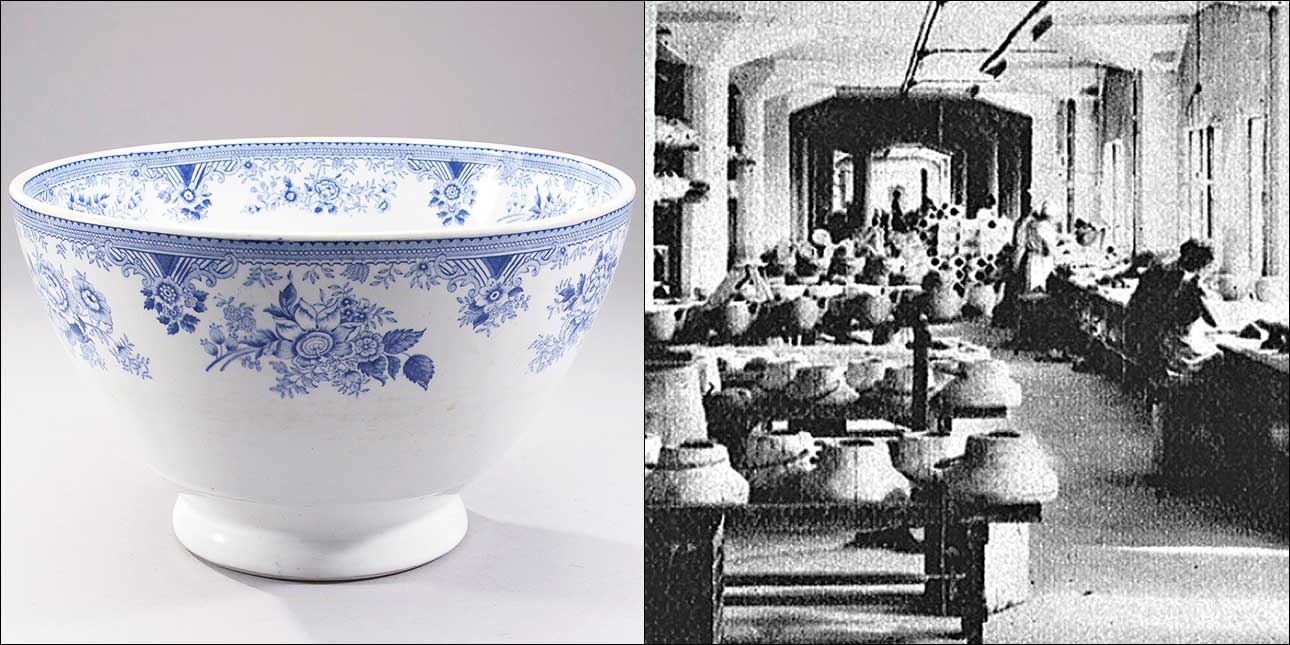
Left image, bowl from the 19th century Fasan series. Right image, Arabia factory decor department at the turn of the century.
Early Years of Pottery Production
In 1874, the first plate was manufactured by Arabia. The early production was simple white faience goods without decor. A few years later, the factory added some tableware series with printed decor, such as ”Fasan”, ”Japan” and ”Willow”. The shapes and decors were similar to those produced by Rörstrand. During the 19th century, most of Arabia’s leadership and skilled workforce came from Sweden.
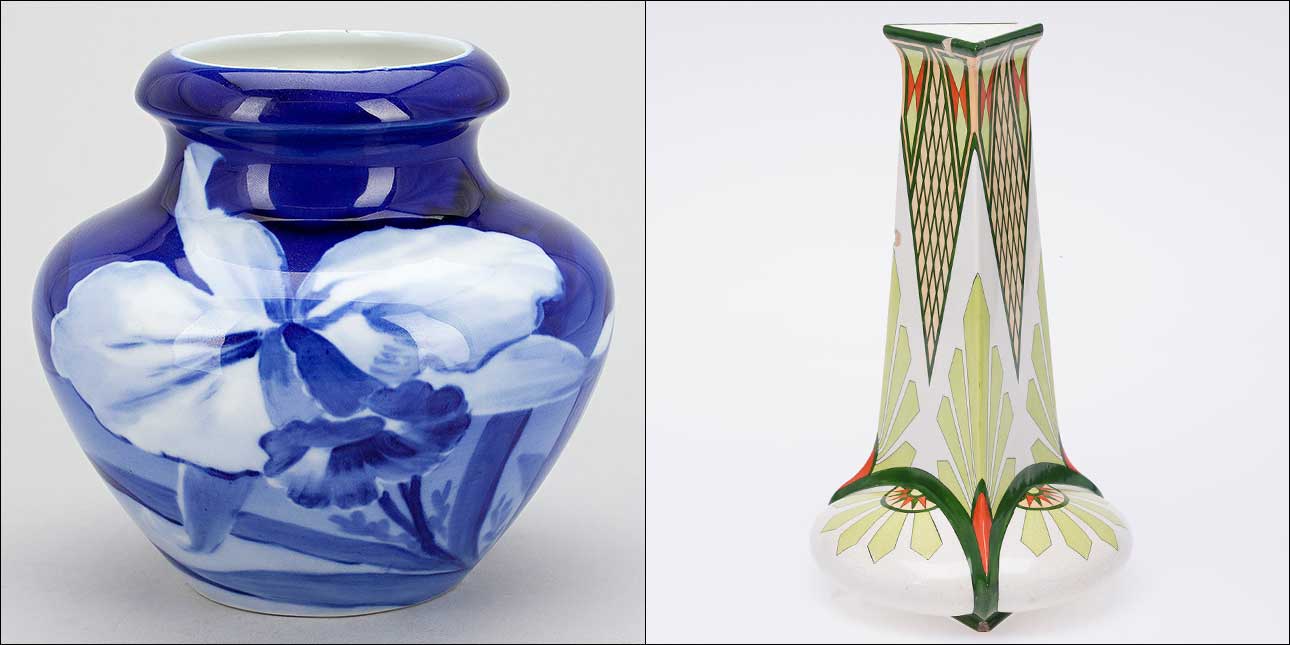
Left image, Thure Öberg’s vase with flower décor from the early 1900s. Right image, Jac Ahrenberg’s Fennia vase from 1913.
Modernization and Recruitment of Artists
In 1893, Gustav Herlitz (1855-1923) was appointed chief executive officer, and a modernization process started. New ovens, clays, and foundries for tiles were developed. He also set up a special decor department and employed distinguished artists like Thure Öberg (1872-1935) and Jac Ahrenberg (1847-1914). Arabia attended the World Exhibition in Paris in 1900 and received a gold medal for the efforts of Öberg. Among other things, he contributed to hand-painted vessels with monochrome decor of Finnish landscapes and flowers.
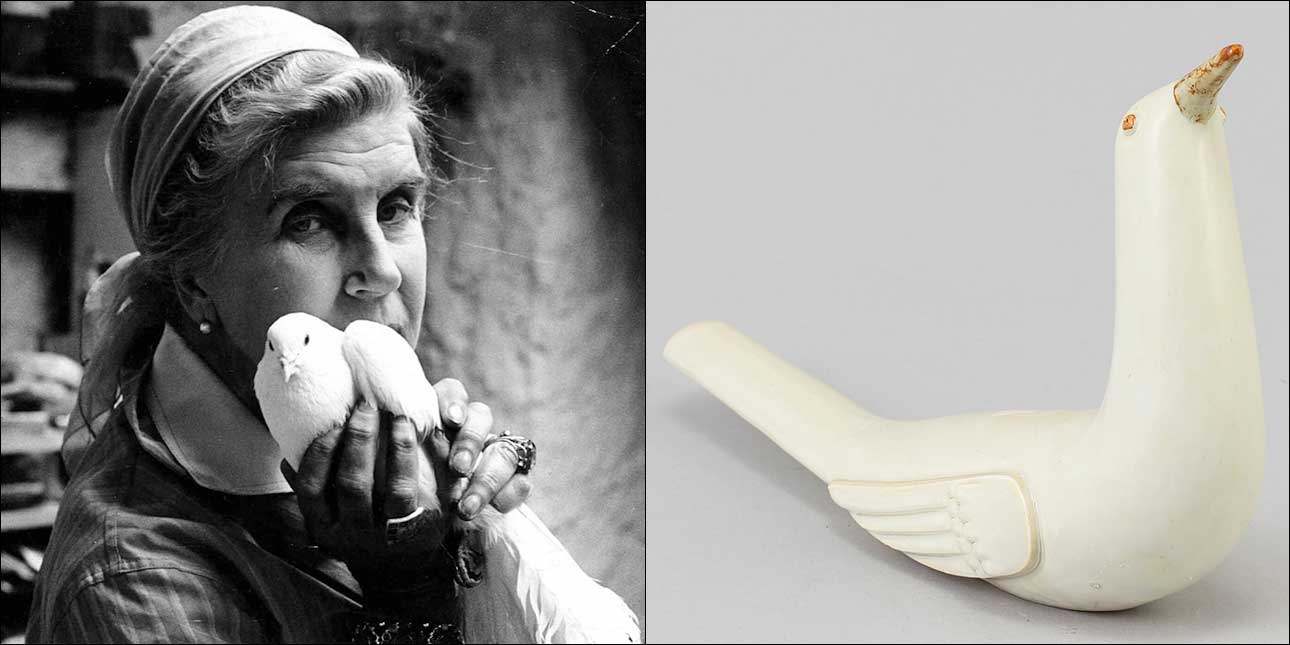
Left image, Tyra Lundgren holding a dove. Right image, Tyra Lundgren’s unique stoneware bird from 1931.
Independence and Tyra Lundgren
The First World War (1914-1919) led to major economic problems for Rörstrand. They sold their last shares in Arabia, which became an independent Finnish company. The factory was modernized from scratch and soon expanded production. In the 1930s and 1940s, Arabia acquired the majority in several Swedish ceramic factories, including its former parent company Rörstrand. During those years, the Swedish artist Tyra Lundgren (1897-1979) worked as a designer at Arabia, and for a short period she was also artistic director of Rörstrand.
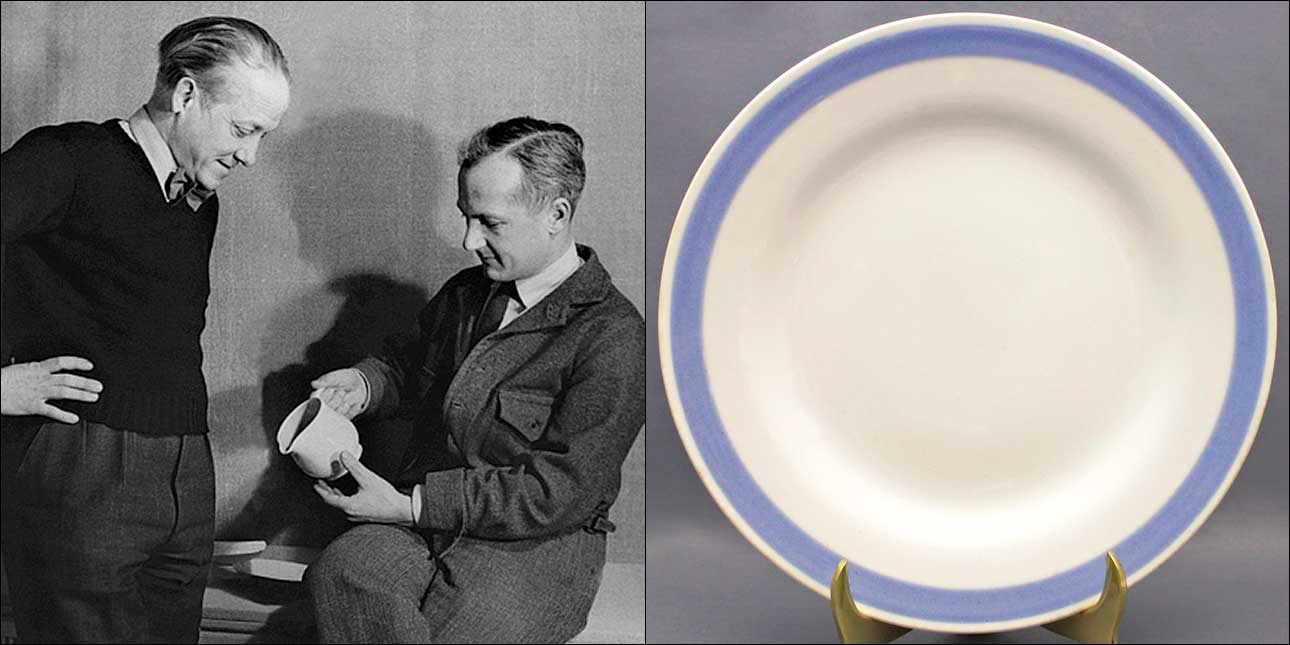
Left image, Kurt Ekholm and Kaj Frank. Right image, plate from the Sinivalko tableware series.
The Start of Arabia's Art Department
In 1932, the ceramist Kurt Ekholm (1907-1975) was appointed artistic leader of Arabia, and he started the factory's famous art department that would soon be world-renowned. With Ekholm, a new era began in Arabia. He influenced the design of household goods in the spirit of functionalism with strict shapes and clean decorations, such as the Pekka and Sinivalko series. Ekholm had an ability to discover young talents, and he hired some of Finland's leading artists - including Michael Schilkin (1900-1962), Birger Kaipiainen (1915-1988), Kaj Franck (1911-1989), Rut Bryk (1916-1999), and Toini Muona (1904-1987).
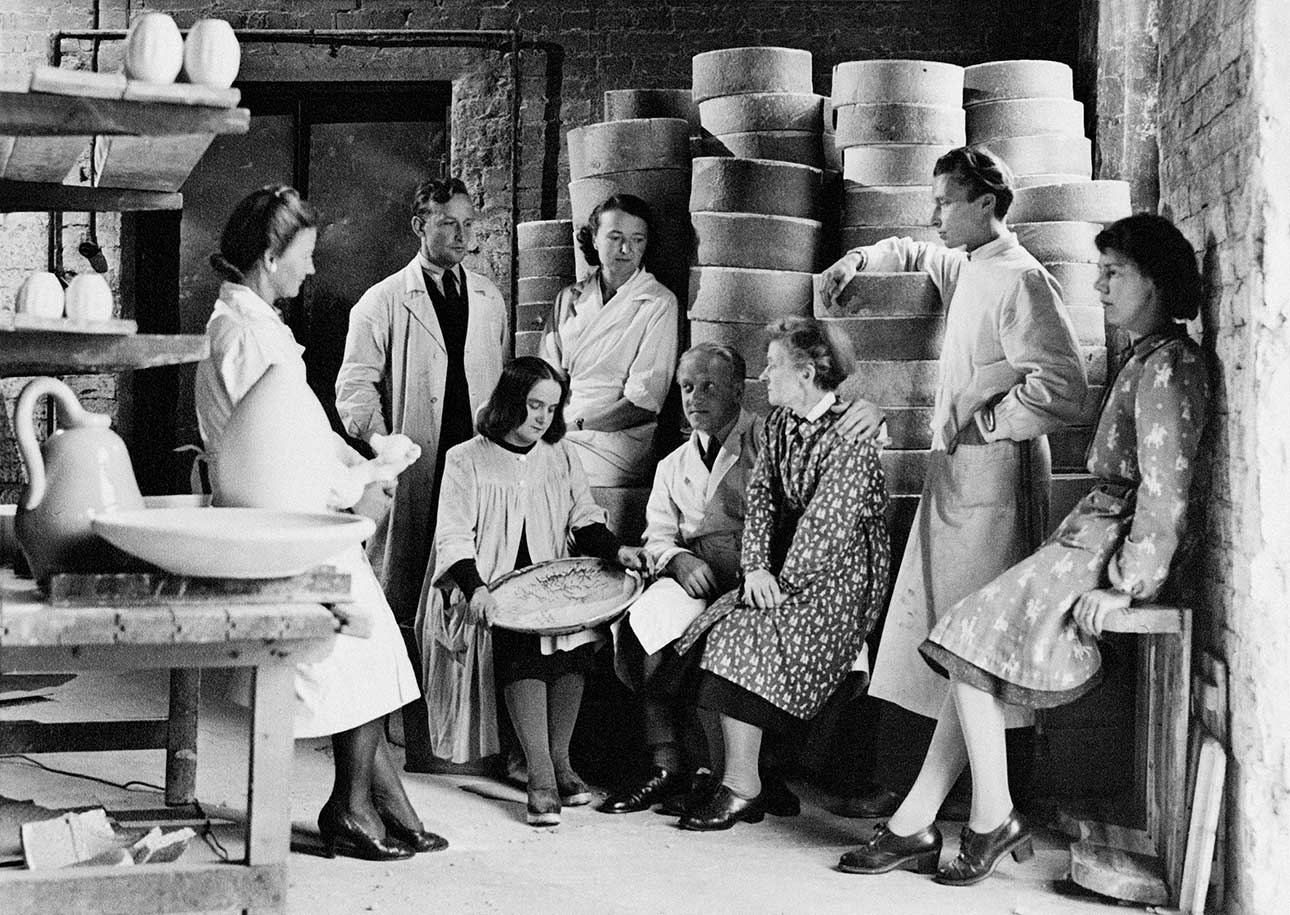
Acclaimed Arabia artists in 1945. From the left to right: Aune Siimes, Michael Schilkin, Toini Muona, Friedl Holzer-Kjellberg, Kurt Ekholm, Lea von Mickwitz, Birger Kaipiainen, and Rut Bryk.
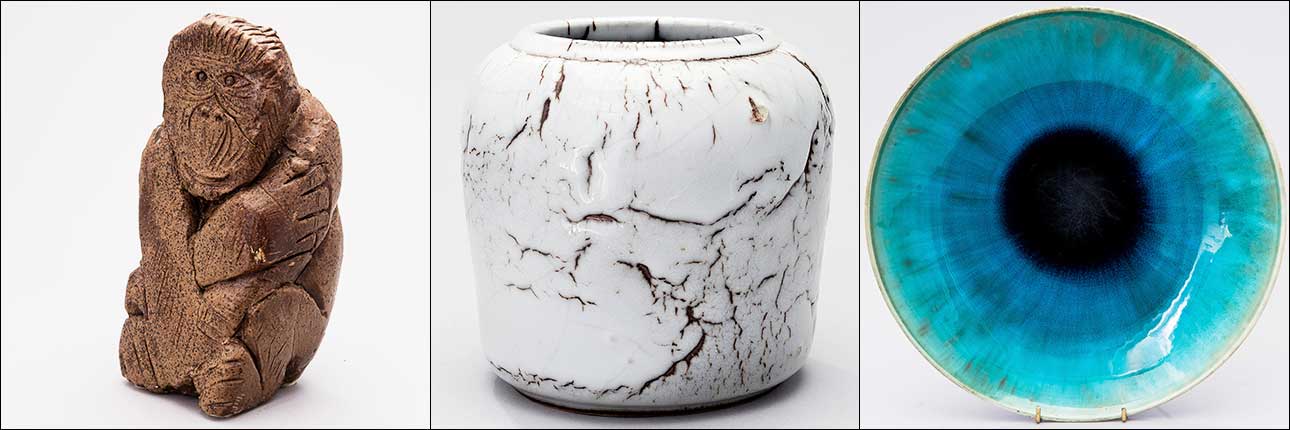
Left image, Michael Schilkin’s mid-century ape stoneware sculpture. Center image, Toini Muona’s stoneware vase from the 1930s. Right image, Friedl Holzer-Kjellberg’s bowl from the 1950s.
The Rise of Birger Kaipiainen
Birger Kaipiainen was only 22 years old when he was employed at Arabia in 1937. He came to the factory's art department to compose motifs for wall tiles, teapots, and vases. His influences came from Italian renaissance, as evident from the human figures that he made in profile and painted in Botticelli's spirit. Kaipiainen quickly became one of Arabia's most influential designers, most famous for his unique stoneware and for the tableware series Paratiisi.
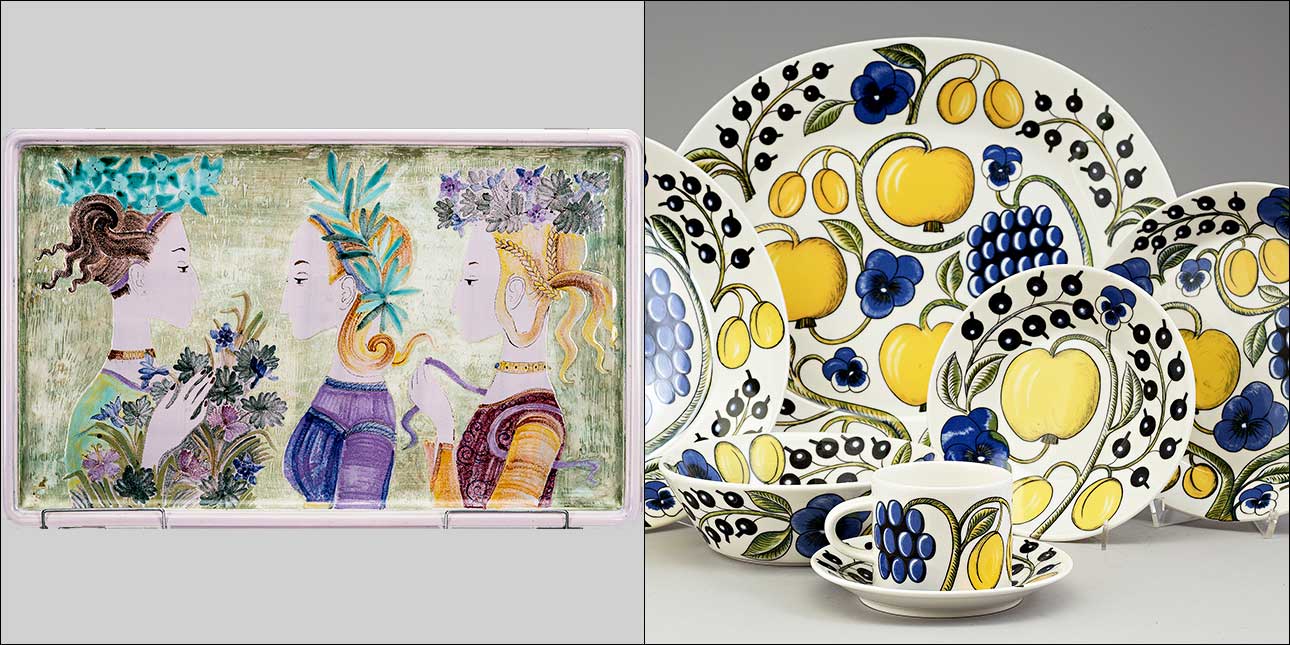
Left image, Birger Kaipiainen’s stoneware dish “The paradise girls" from 1941. Right image, Birger Kaipiainen’s Paratiisi series from 1969.
Kaj Franck as Artistic Leader
At the outbreak of World War II in 1939, Arabia was Europe's largest porcelain factory and employed more than a thousand people. But at the end of the war, the important export market was heavily weakened. In 1945, Kaj Franck was employed as a new designer, and he proved to be just the power that Arabia needed. Three years later, he succeeded Kurt Ekholm as the artistic leader of the factory. Franck created a whole new view on tableware with the focus on a simple but beautiful meal environment.
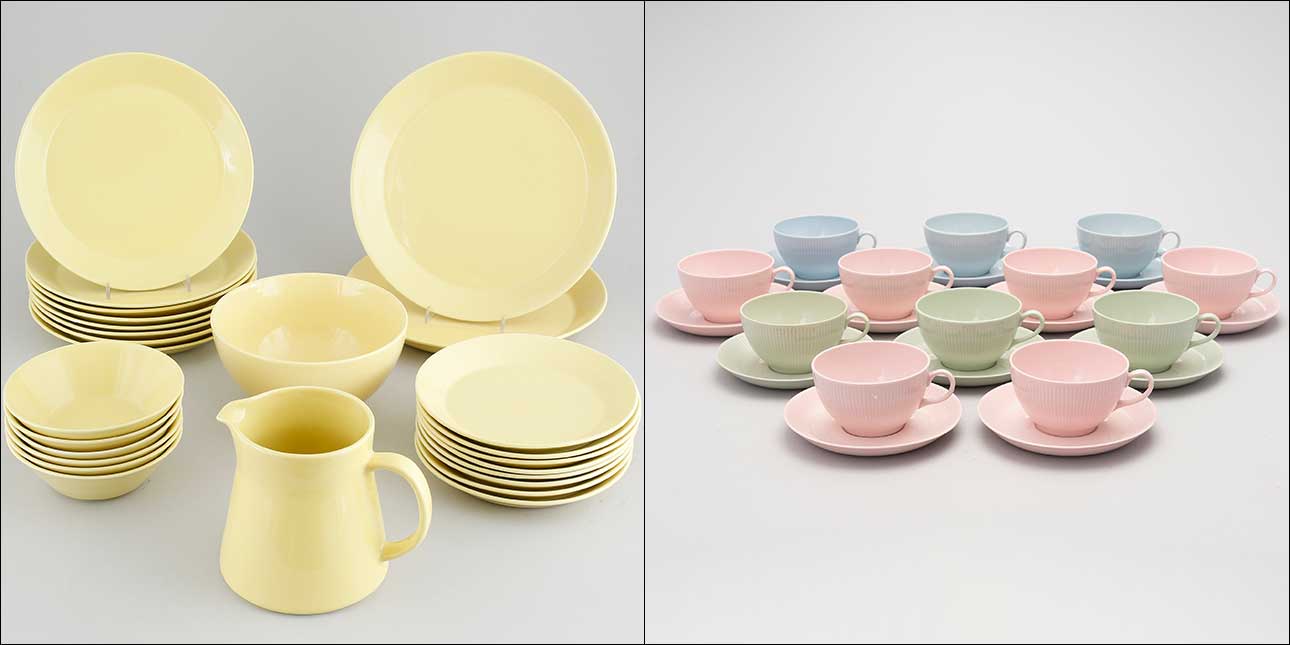
Left image, tableware from the Kilta series in 1952. Right image, cups from the series Sointu in 1949.
The post-war years were hard in Finland. There was a lack of everything, not the least tableware. Franck therefore designed the Kilta series where each part had several functions. The idea was that consumers could buy individual pieces and still have a functional set. Kilta could also be combined with older tableware series. Franck propagated for mixing and matching, which was a revolutionary new idea.
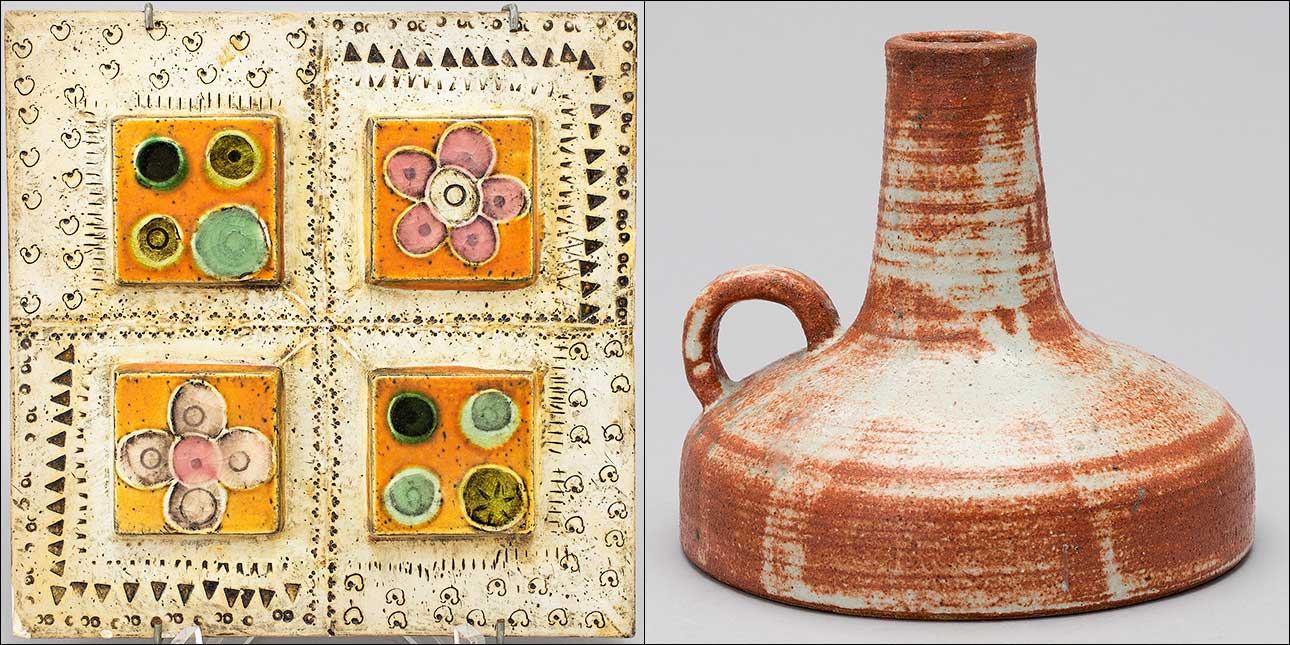
Left image, Rut Bryk’s colorful wall plaque from the mid-century. Right image, Oiva Toikka’s unique vase from the 1950s.
International Success for Finnish Design
In the Triennial of Milan in 1951, Finnish design widely acclaimed, and seven of the awards went to the artists of Arabia. Rut Bryk was awarded the Grand Prix for her colorful faience plaques. Finland's success continued in the Triennals of 1954 and 1957. In the mid-fifties, Arabia hired the artist
Oiva Toikka (1931-) who created stylized wall plaques, vases and sculptures. He would later become the most famous of Finland’s glass designers.
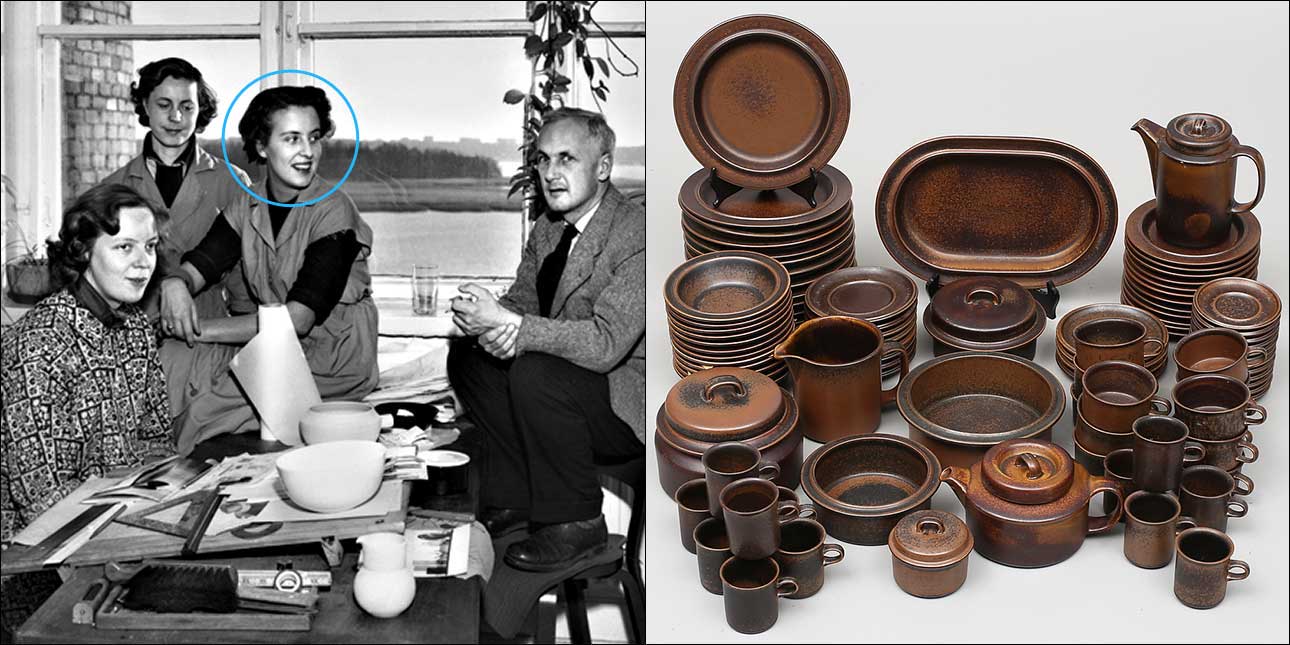
Left image, Ulla Procopé with Arabia colleagues. Right image, Ulla Procopé’s Ruska tableware series from 1960.
Brown as Finnish Ceramics!
In the 1950s, oven and flameproof materials were developed by the Arabia laboratory. They were used by Ulla Procopé (1921-1988) in her rustic Ruska series, which became almost synonymous with Finnish pottery. The series was made of heavy stone mass that was so popular in the sixties.
Kindhearted Nordic Design of the late 1900s
In the latter half of the 20th century, a multitude of Arabia designers created high-quality pottery artware. Artists like Taisto Kaasinen (1918-1980),
Lillemor Mannerheim (1927-1994), and Howard Smith (1928-) created stoneware figurines that today decorate many Scandinavian homes. Their expression was often warm-hearted, humorous, and sometimes subtly ironic in the contemporary Nordic tradition.
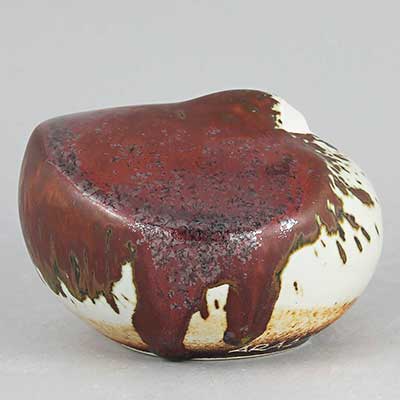
Peter Winqvist, 1960s
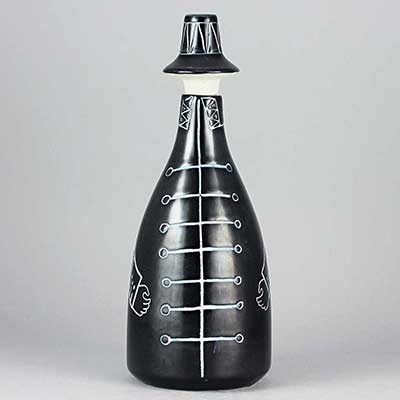
Eira Käär, 1954
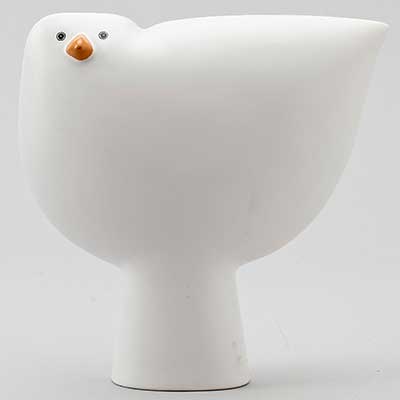
Howard Smith, 1980s
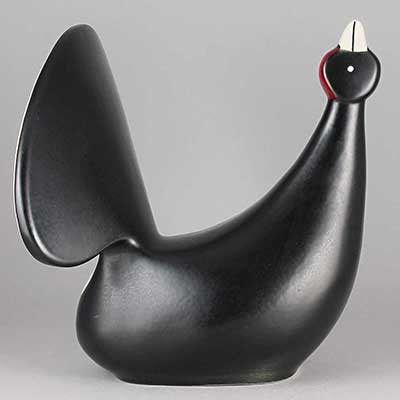
Lillemor Mannerheim, 1984
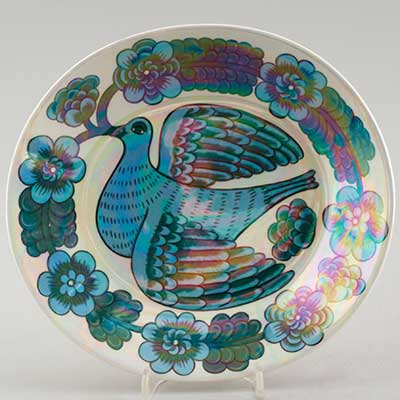
Birger Kaipiainen, 1970s
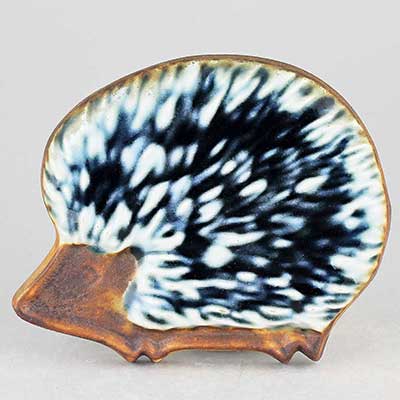
Gunvor Olin-Grönqvist, 1960s
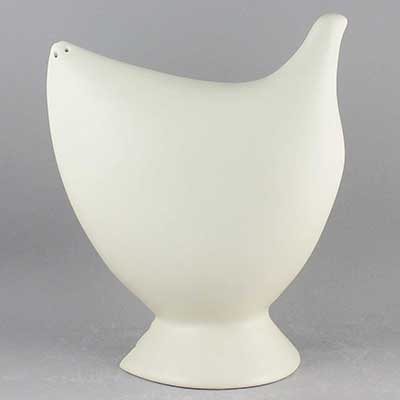
Pauli Partanen, 1980s

Kaarina Aho, 1959
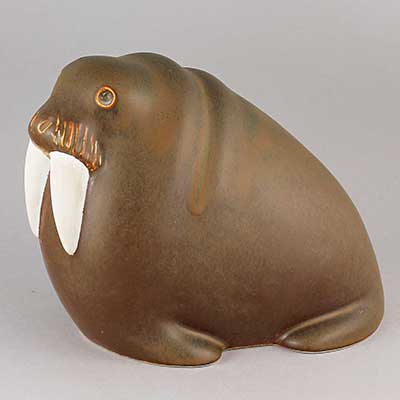
Taisto Kaasinen, 1960s




.jpg)
.jpg)


.jpg)


.jpg)

.jpg)


.jpg)


